Safety starts with Safety Pole
Regulatory references reviewed November 19, 2026.
Employers are responsible for ensuring that workers recognize fall hazards, receive training appropriate to their assigned work, use suitable protective equipment, and remain under the supervision required by applicable regulations. Manufacturer instruction supports these obligations but does not replace them.
Fall-protection training is an ongoing responsibility. As construction progresses, crews encounter changing elevations, structural conditions, work assignments, and equipment arrangements. Training appropriate to one activity may not adequately prepare employees for another.
For contractors using the Safety Pole System, an effective program connects regulatory requirements with current manufacturer instructions, competent supervision, equipment inspection, and reliable documentation.
Under 29 CFR §1926.503, employers must provide fall-hazard training to employees who may be exposed to falling hazards.
Training must enable employees to recognize those hazards and understand the procedures necessary to minimize them. It must be provided by a competent person qualified in the subjects being taught.
Depending on the work and protective systems involved, required instruction includes:
Recognizing fall hazards in the work area.
Understanding the proper erection, maintenance, disassembly, inspection, and use of fall-protection systems.
Understanding the use and operation of applicable protective equipment.
Following appropriate equipment-handling and storage procedures.
Understanding employee responsibilities within applicable fall-protection plans.
Recognizing the relevant regulatory requirements.
Employers must also verify the required training through written certification records and provide retraining when circumstances demonstrate that previous instruction is inadequate.
Training must address the actual hazards and protective arrangements employees will encounter—not merely general familiarity with fall-protection equipment.
California construction employers must maintain an effective Injury and Illness Prevention Program (IIPP) under Title 8 §1509 and §3203.
These provisions establish responsibilities for hazard identification, employee instruction, workplace communication, corrective action, and documentation.
Training is required for newly hired employees, employees assigned unfamiliar work, and employees affected by new procedures, equipment, or previously unrecognized hazards. Supervisors must also be familiar with hazards affecting the employees they direct.
For applicable residential-type framing activities, §1716.2(j) specifically requires employees exposed to fall hazards to receive instruction in recognizing those hazards and minimizing their exposure. The training must be documented in accordance with §3203.
California §1509(e) also requires supervisors to conduct toolbox, tailgate, or equivalent crew safety meetings at least every 10 working days.
These recurring meetings can reinforce important safety practices, but should not be considered a substitute for the instruction required by the employee’s actual work.
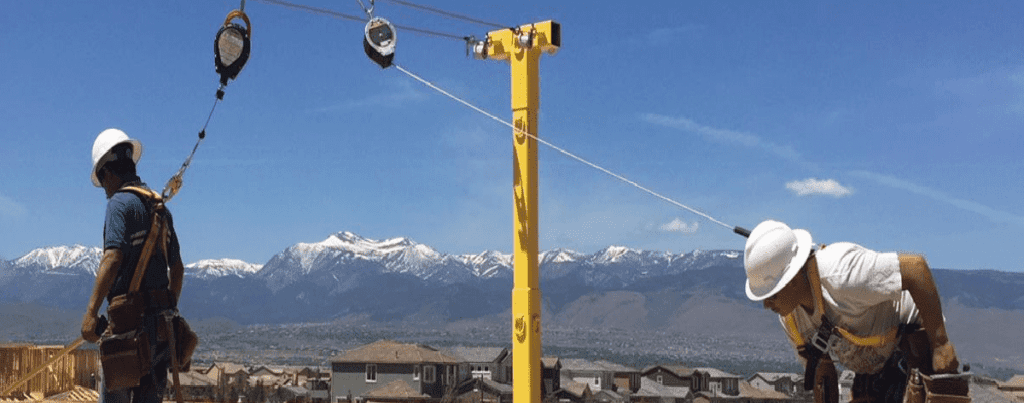
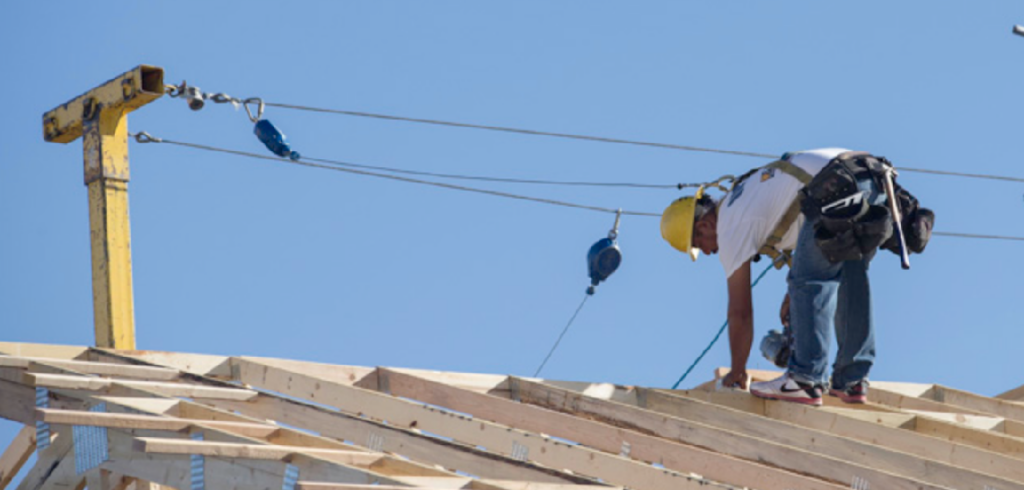
The Safety Pole System provides modular fall-protection infrastructure for defined Single Anchor and Horizontal Lifeline (HLL) applications.
Employers using Safety Pole should incorporate the applicable manufacturer instructions into their training programs, with attention to the equipment configuration, personnel responsibilities, and conditions under which the system will be used.
Training subjects should include recognizing the system’s intended applications and limitations, identifying damaged or unsuitable equipment, understanding compatible personal fall-protection equipment, following approved manufacturer procedures, and recognizing conditions that require corrective action.
The 2026 Safety Pole Installation Manual (SP-INS-2501-A) remains the controlling manufacturer publication pending an approved successor. It provides the manufacturer’s current documented foundation for installation, use, inspection, maintenance, and related safety responsibilities.
Safety Pole’s historical practical-demonstration materials, training module, and instructor record show that manufacturer-oriented instruction has included equipment familiarization, inspection, supervised demonstration, safety review, and attendee acknowledgment.
These materials provide useful evidence of the training program’s development. Older installation procedures and technical criteria must not be treated as current instructions without verification against the controlling manufacturer publication.
Safety Pole also provides English- and Spanish-language instructional videos and additional resources through its Installation page and Documentation Hub.
Manufacturer training does not independently establish OSHA Competent Person or Qualified Person status.
Employers must assign appropriate personnel to supervise work, recognize hazards, inspect equipment, and address unsafe conditions.
Federal OSHA distinguishes between a competent person, who must possess hazard-recognition capability and authority to take corrective action, and a qualified person, whose demonstrated abilities relate to the particular technical work assigned.
Horizontal lifeline systems carry specific qualified-person supervision requirements under 29 CFR §1926.502 and California Title 8 §1670.
Employees must also understand how to recognize potentially defective equipment and when it must be removed from use.
For more detailed guidance, consult Competent & Qualified Person Responsibilities and Fall-Protection Inspections & Logbooks.
Federal §1926.503(b) requires employers to prepare written certification identifying the trained employee, the training date or dates, and the signature of the trainer or employer. The latest certification must be maintained.
California §3203(b) requires documentation of applicable safety training, including employee identification, dates, training subjects, and providers. Its general minimum retention period is one year, subject to specified exceptions.
A practical employer record should connect the training provided with the equipment, hazards, instructor, and work responsibilities involved.
Safety Pole’s existing instructor and attendance materials offer examples of how participation can be recorded. However, an attendance signature alone does not demonstrate that every required training subject was covered or that the employee possesses the necessary practical understanding.
Contractors should distinguish employee training certification from equipment inspection records, technical approvals, and the designation of competent or qualified personnel. Each serves a different purpose within the overall safety program.
Training should remain relevant throughout the project.
Changes in construction phase, working elevation, equipment configuration, personnel assignments, or protective arrangements should prompt the employer to evaluate whether earlier instruction remains sufficient.
Federal §1926.503(c) requires retraining when workplace or equipment changes make previous training inadequate, or when employee knowledge or performance demonstrates that necessary understanding or skill has not been retained.
For Safety Pole applications, continued safe use depends on maintaining the relationship between approved manufacturer procedures, appropriate personnel, equipment condition, and changing worksite requirements.
Training, supervision, inspection, and documentation are related responsibilities. Together, they help ensure that a fall-protection arrangement remains appropriate to the work being performed.
No. Manufacturer instruction is an important part of preparing workers to use the Safety Pole System, but it does not replace the employer’s responsibility to provide training appropriate to the actual fall hazards, assigned work, and protective equipment.
Under federal OSHA 29 CFR §1926.503, employers must ensure that employees exposed to fall hazards receive training from a competent person qualified in the relevant subjects. Training must address hazard recognition, protective systems, proper equipment use, and applicable procedures.
Safety Pole’s manufacturer training, instructional videos, and manuals provide product-specific support for that broader responsibility. Employers should use the current approved materials and confirm that their training programs address the conditions of each jobsite.
No. Completing manufacturer training does not automatically establish either designation under OSHA or Cal/OSHA.
Federal 29 CFR §1926.32 defines a competent person as someone capable of identifying existing and predictable hazards who also has authority to take prompt corrective action. A qualified person must demonstrate the knowledge, experience, training, or other qualifications necessary to resolve problems involving the particular subject or work.
These responsibilities depend on the individual’s demonstrated capabilities and assigned duties. Manufacturer training may contribute to the necessary knowledge, but the employer must ensure that personnel satisfy the applicable regulatory requirements.
This distinction is particularly important when working with horizontal lifeline systems, for which federal OSHA and Cal/OSHA specify qualified-person supervision requirements.
Related resource: Competent & Qualified Person Responsibilities
Not necessarily. A signed attendance sheet can help document participation, but it does not independently establish that the required training was delivered or that an employee has demonstrated the necessary understanding.
Under 29 CFR §1926.503(b), federal OSHA requires employers to prepare a written training certification record identifying the employee, the training date or dates, and the signature of the person who conducted the training or the employer. The latest certification must be maintained.
California Title 8 §3203 also requires documentation of applicable safety training, including employee identification, training dates, subjects covered, and training providers, subject to specified recordkeeping exceptions.
Safety Pole’s instructor and attendance materials can support an employer’s records, but should be used alongside the employer’s required training certification and documentation procedures.
Related resource: Fall-Protection Inspections & Logbooks
Retraining is required when an employer has reason to believe that an employee no longer possesses the understanding or skills necessary to recognize and address the applicable fall hazards.
Federal 29 CFR §1926.503(c) identifies circumstances requiring retraining, including changes in workplace conditions, changes in fall-protection systems or equipment that render previous training inadequate, and demonstrated deficiencies in an employee’s knowledge or equipment use.
For crews using Safety Pole, changes in working elevation, system configuration, equipment, assigned duties, or construction sequence should prompt supervisors to evaluate whether existing instruction remains sufficient.
Employees must understand the protective arrangements associated with their current work. Familiarity with an earlier installation or deployment does not, by itself, establish readiness for different conditions.
Related resource: Safety Pole Installation Resources
Not automatically. Toolbox talks are useful for reinforcing hazard awareness, reviewing upcoming work, discussing changing jobsite conditions, and communicating corrective actions. However, attendance at a safety meeting does not necessarily establish that an employee has received all required task-specific training.
California Title 8 §1509(e) requires supervisory employees to conduct toolbox, tailgate, or equivalent crew safety meetings at least every ten working days.
California’s §1716.2(j) further requires employees exposed to fall hazards during applicable residential-type framing activities to be trained to recognize those hazards and understand the procedures for minimizing them, with training documented under §3203.
Contractors should therefore treat recurring safety meetings as one component of a broader training program that includes appropriate instruction, competent supervision, and required documentation.
Related resource: California Fall-Protection Requirements
Understand federal OSHA’s residential construction fall-protection requirements, including when protection is necessary, which systems are permitted, and the responsibilities contractors must address.
Explore California’s construction fall-protection regulations, including the state’s six-foot requirements for specified residential framing and roofing activities and the distinctions that affect different types of work.
Learn how Cal/OSHA’s residential framing regulations apply to work on top plates, joists, trusses, and roof sheathing—and what contractors need to consider before crews work at height.
Understand the employer’s responsibilities for worker training, supervision, and documentation under OSHA and Cal/OSHA, and how manufacturer resources support those obligations.
Effective fall protection begins before work at height. Explore resources for preparing site-specific plans, assigning safety responsibilities, and maintaining equipment inspection records.
Find explanations of common fall-protection questions, technical terminology, and the regulations behind construction safety requirements. These resources help contractors locate and understand the information relevant to their work.
Learn how the Safety Pole System supports planned fall-protection arrangements as part of an employer-managed safety program. Explore our standards-driven approach, manufacturer documentation, and resources for evaluating your project’s requirements.
Compliance statement
Safety Pole is one component of a complete fall-protection program. Regulatory compliance depends on the actual system configuration and installation, compatible equipment, worker training, inspection, supervision, maintenance, site conditions, and all applicable federal, state, local, and project requirements. Use of the Safety Pole System does not, by itself, establish employer or worksite compliance.