Safety starts with Safety Pole
Understanding OSHA, Cal/OSHA, and Fall-Protection Oversight
Regulatory references reviewed: November 19, 2026.
Competent and qualified persons perform different functions within a construction safety program. A competent person must be capable of identifying hazards and authorized to correct them. A qualified person must have demonstrated the knowledge and ability required for the particular technical duties assigned.
Fall-protection systems require more than equipment selection. Contractors must determine who will evaluate site conditions, supervise work, approve specialized arrangements, inspect equipment, and respond when conditions change.
Federal OSHA and Cal/OSHA assign particular duties to competent or qualified persons. Understanding those responsibilities helps employers establish an appropriate division between field supervision and specialized technical oversight.
Federal OSHA 29 CFR §1926.32(f) defines a competent person through two essential characteristics: the ability to identify existing and foreseeable workplace hazards, and authorization to take prompt corrective measures.
California Title 8 §1504 uses a substantially similar definition.
Both elements matter.
A superintendent or foreman may have considerable construction experience, but experience alone does not establish the authority to require correction of unsafe conditions.
Likewise, an employee authorized to stop work must possess the knowledge necessary to recognize the hazards relevant to the assigned responsibilities.
The employer must ensure that the person designated for a particular duty has the necessary capabilities and authority.
Federal OSHA §1926.32(m) defines a qualified person by demonstrated ability to resolve problems relating to the subject, work, or project, supported by appropriate credentials, professional standing, knowledge, training, or experience.
California §1504 defines a Qualified Person, Attendant or Operator as an employer-designated person whose training, experience, or instruction demonstrates the ability to perform assigned duties safely, with required licensing where applicable.
These definitions are related, but their exact wording and application should not be treated as identical.
A qualified-person responsibility may involve specialized evaluation, engineering judgment, or the approval of a protective arrangement under a particular regulation.
A qualified person is qualified for the subject and task concerned—not automatically for every fall-protection application.
Federal §1926.502(d)(8) requires horizontal lifelines to be designed, installed, and used under qualified-person supervision as part of a complete personal fall arrest system.
California §1670(b)(2) contains a corresponding requirement.
Other provisions assign qualified-person responsibilities to particular anchorage arrangements and alternative fall-protection plans.
For example, federal §1926.502(k) and California §1671.1 require regulated alternative fall-protection plans to be prepared by qualified persons, with changes approved under the applicable provisions.
These requirements do not mean every employee using a horizontal lifeline must individually be a qualified person. They mean the specified system responsibilities must be exercised under the required qualified oversight.
Federal §1926.20(b)(2) requires regular jobsite, material, and equipment inspections by competent persons designated by the employer.
Under §1926.503, employee fall-hazard training must be provided by a competent person qualified in the required training subjects.
Regulated alternative fall-protection plans under §1926.502(k) must be implemented under competent-person supervision.
California also assigns specific inspection responsibilities to competent persons. Under §1670(b)(19), applicable personal fall arrest systems must undergo competent-person inspection at least twice annually in accordance with manufacturer recommendations, with the dates documented.
A competent person must be able to recognize unsafe conditions and initiate the corrective action required by the employer’s program and the governing regulations.
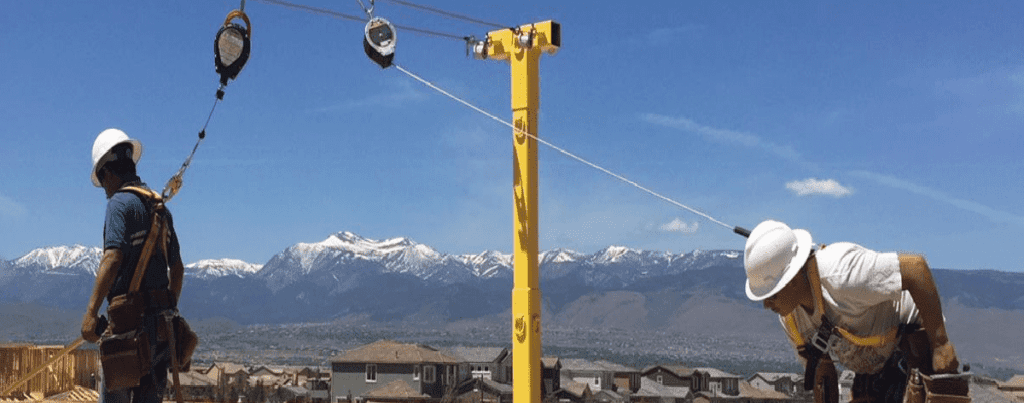
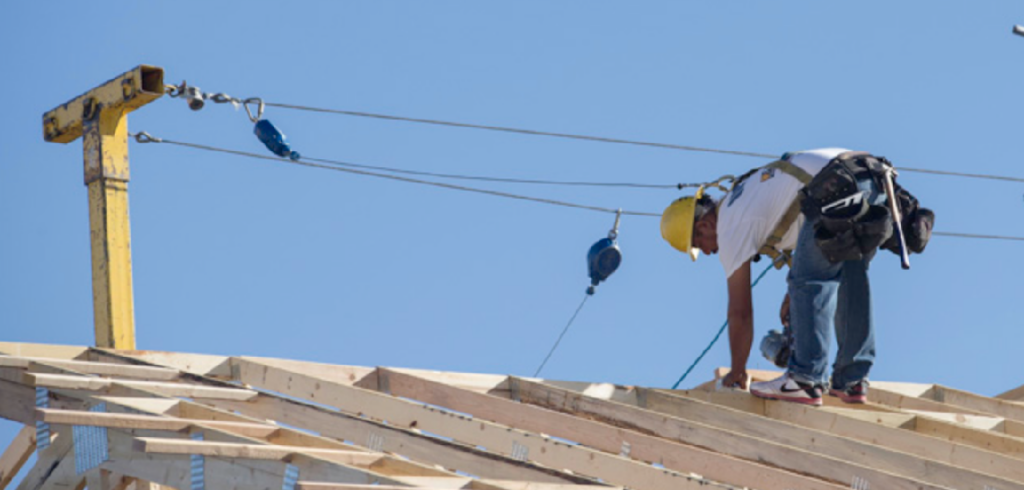
The Safety Pole System provides engineered fall-protection infrastructure for defined construction applications.
Its Single Anchor and Horizontal Lifeline (HLL) deployment arrangements must be evaluated according to current manufacturer instructions, approved configurations, supporting conditions, and applicable regulatory requirements.
Where a Safety Pole deployment forms part of an HLL system, the applicable qualified-person supervision requirements must be satisfied.
Field responsibilities may also include verifying equipment condition, monitoring the installed arrangement, identifying changes in construction conditions, and ensuring that defective or questionable equipment is removed from use.
The employer must determine which personnel are appropriately trained, qualified, and authorized for each task.
Safety Pole manufacturer documentation supports understanding of the system. It does not replace the technical determinations or supervisory responsibilities assigned by OSHA, Cal/OSHA, or the employer.
No. Manufacturer training and regulatory designations are not interchangeable.
Safety Pole instructional resources can support equipment familiarization, intended-use understanding, and recognition of the need for current manufacturer procedures.
However, attendance at a training session or completion of an installation demonstration does not independently establish the hazard-recognition authority required of a competent person.
Nor does it automatically establish the technical qualifications needed to supervise an HLL arrangement or prepare a regulated alternative fall-protection plan.
Employers must verify and document the qualifications and authorization appropriate to each assigned responsibility.
The Safety Pole Documentation Hub provides available manufacturer resources, while the Installation page directs visitors to instructional material.
An effective assignment process should make responsibilities clear before work begins.
For each relevant duty, an employer may document the designated person’s identity, assigned scope, supporting qualifications, authority, and any required approvals.
Records may also identify required inspections, training activities, alternative-plan preparation or changes, and corrective actions.
California §1671.1, for example, requires regulated alternative fall-protection plans to document the identities of the qualified person preparing the plan and the competent person supervising implementation.
California’s Injury and Illness Prevention Program rules require identification of persons with program responsibility and specified records of workplace inspections and training.
Documentation should be accurate and current. Recording a person’s name on a form does not establish the capabilities or authority required to perform the assigned function.
Yes, when that individual independently satisfies the applicable requirements for both roles and has the authority necessary for the assigned competent-person duties.
Not automatically. Installation and supervisory requirements depend on the activity, approved configuration, manufacturer instructions, and applicable regulations. HLL arrangements carry specific qualified-person supervision requirements.
No. Training credentials may provide evidence of instruction, but competent-person status also requires the capability to recognize relevant hazards and authorization to take prompt corrective measures.
The employer is responsible for ensuring that the personnel assigned to regulated duties possess the necessary qualifications and authority. Particular responsibilities and documentation requirements depend on the governing standard.
Construction conditions change as work progresses. Establishing who may inspect, supervise, authorize corrective action, or make technical decisions helps contractors respond appropriately when those conditions change.
For information about Safety Pole configurations, approved manufacturer instructions, and available training-support resources, visit the Documentation Hub or contact Safety Pole.
Compliance Statement
Safety Pole is one component of a complete fall-protection program. Regulatory compliance depends on the actual system configuration and installation, compatible equipment, worker training, inspection, supervision, maintenance, site conditions, and all applicable federal, state, local, and project requirements. Use of the Safety Pole System does not, by itself, establish employer or worksite compliance.
Understand federal OSHA’s residential construction fall-protection requirements, including when protection is necessary, which systems are permitted, and the responsibilities contractors must address.
Explore California’s construction fall-protection regulations, including the state’s six-foot requirements for specified residential framing and roofing activities and the distinctions that affect different types of work.
Learn how Cal/OSHA’s residential framing regulations apply to work on top plates, joists, trusses, and roof sheathing—and what contractors need to consider before crews work at height.
Understand the employer’s responsibilities for worker training, supervision, and documentation under OSHA and Cal/OSHA, and how manufacturer resources support those obligations.
Effective fall protection begins before work at height. Explore resources for preparing site-specific plans, assigning safety responsibilities, and maintaining equipment inspection records.
Find explanations of common fall-protection questions, technical terminology, and the regulations behind construction safety requirements. These resources help contractors locate and understand the information relevant to their work.
Learn how the Safety Pole System supports planned fall-protection arrangements as part of an employer-managed safety program. Explore our standards-driven approach, manufacturer documentation, and resources for evaluating your project’s requirements.