Safety starts with Safety Pole
Planning Fall Protection Before Crews Work at Height
Regulatory references reviewed November 19, 2026.
A useful framing fall-protection plan identifies the worksite’s fall hazards, the protective measures selected, the people responsible, and how protection will be maintained as construction progresses. A regulated alternative fall-protection plan has additional requirements and is permitted only under specified conditions.
Template availability: The E3 residential framing fall-protection plan template is not yet confirmed as an approved public download. Until its release, consult current applicable regulations, manufacturer instructions, and your employer’s approved site-specific procedures.
Residential framing changes the working environment rapidly. Floor systems, walls, roof framing, and sheathing introduce different exposures as the structure takes shape.
A plan prepared before work begins gives contractors a way to consider those changes and communicate the intended protective arrangements to crews and supervisors.
It should address the actual project rather than merely repeat general safety policies.
Employers must comply with applicable fall-protection standards and provide protective measures where required.
A documented project planning worksheet can be useful for coordinating those responsibilities, but it should not be confused with the alternative fall-protection plan regulated under federal 29 CFR §1926.502(k) or California Title 8 §1671.1.
Those alternative-plan provisions address circumstances where the employer demonstrates that conventional fall protection is infeasible or creates a greater hazard.
There is a presumption that conventional protection is feasible. An employer cannot use an alternative plan simply because conventional measures require more equipment, additional time, or coordination.
The planning process should begin with the building and the anticipated construction sequence.
Contractors should identify the elevations and work activities that will expose employees to falls, including elevated floors, unprotected sides, structural framing members, openings, roof structures, and leading edges.
They should then determine which regulations apply and what protection is permitted.
For each relevant activity, a project planning worksheet can record the selected protective method, access arrangements, supervision, equipment requirements, and inspection responsibilities.
A plan should also address how protection will be maintained when crews move to another working area or the structure changes.
The intent is to make the protective arrangement understandable and available before the exposure occurs.
A practical worksheet can organize the following information:
Project identification: Contractor, worksite, construction type, responsible supervisor, date, and revision.
Activity and exposure: Description of the work, relevant elevation, unprotected edges or openings, and applicable regulatory provisions.
Selected protection: The protective method chosen for each activity, including any required approved system configuration.
Equipment and supporting conditions: Applicable manufacturer documents, supporting structure verification, compatible components, and relevant limitations.
Personnel responsibilities: Individuals assigned to supervision, inspection, training, technical evaluation, and other required functions.
Inspection and rescue: Pre-use checks, documented periodic inspections where applicable, equipment removal criteria, and prompt rescue arrangements.
Changes and review: Procedures for reviewing altered work conditions, equipment arrangements, personnel assignments, and construction phases.
These are suggested organizational fields, not a substitute for the specific information required by an applicable regulation.
When an employer invokes federal §1926.502(k), the alternative plan must meet the detailed requirements of that section.
These include qualified-person preparation and approval of changes, competent-person supervision, documentation of why conventional protection is infeasible or creates a greater hazard, and descriptions of alternative measures.
Where prescribed, the plan must identify controlled-access zones, safety-monitoring arrangements, and employees authorized to work within those zones.
California §1671.1 establishes corresponding requirements for qualifying alternative plans under California law. The governing activity-specific provisions must also be satisfied.
For example, California §1716.2(e)(2) includes a narrowly conditioned alternative for specified interior-framing work between six and fifteen feet. It does not create general permission to work without conventional protection.
A qualified person must approve changes to a regulated alternative plan, and the current plan must remain available at the jobsite.
Where a personal fall-protection system is selected, the planning process should identify the approved anchorage arrangement and the conditions governing its use.
That includes the intended work area, suitable supporting structure, compatible personal equipment, applicable fall-clearance and swing-fall considerations, and necessary inspections.
Horizontal lifeline arrangements require qualified-person supervision under applicable standards.
A proposed anchorage location cannot be treated as suitable solely because a physical attachment appears possible.
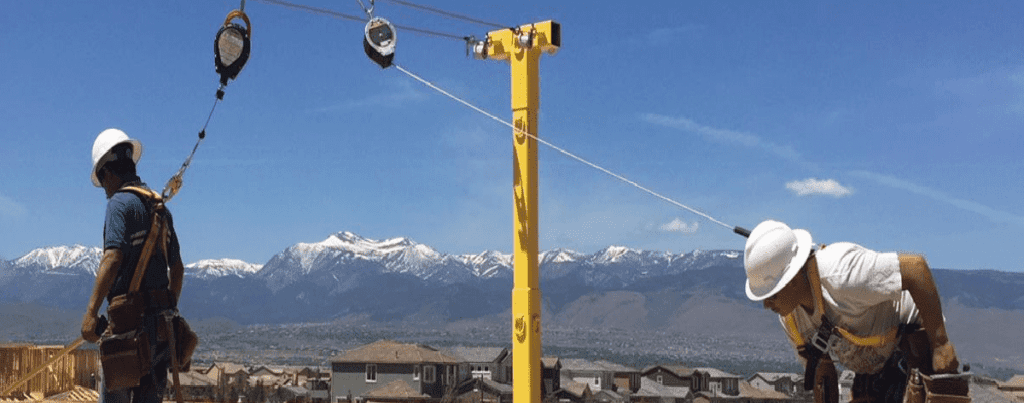
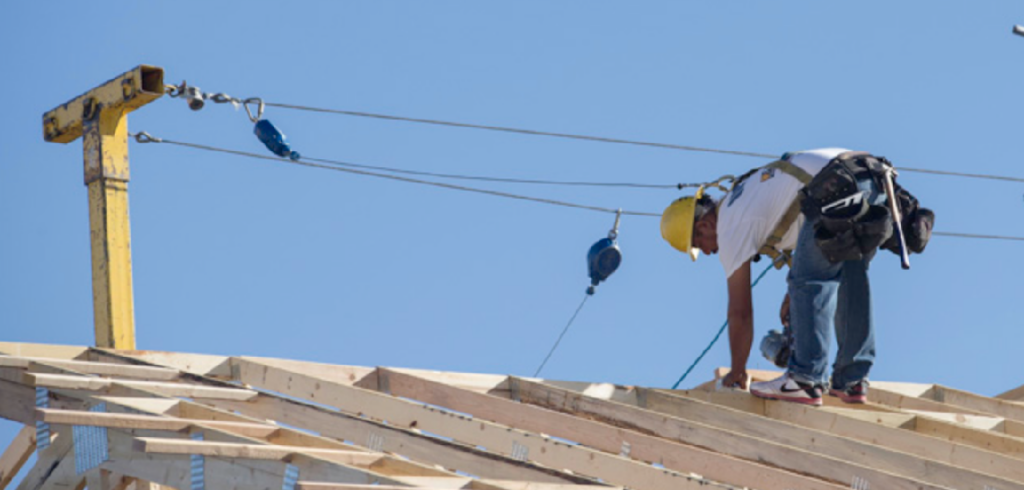
The Safety Pole System provides modular, engineered infrastructure that contractors can consider when planning approved fall-protection anchorage arrangements.
Its Single Anchor and Horizontal Lifeline (HLL) deployment classifications allow different system applications to be evaluated against the work and approved manufacturer documentation.
For framing contractors, these considerations can be addressed before the job progresses from initial structural work to elevated floors and roof framing.
Safety Pole provides engineered fall-protection infrastructure designed for use within an OSHA-compliant fall-protection program.
The employer remains responsible for confirming that the selected arrangement is suitable, properly installed, inspected, supervised, and used in accordance with the applicable requirements.
Safety Pole does not independently establish project compliance or approve an employer’s alternative fall-protection plan.
A plan should be revisited when the work changes in ways that affect fall exposure or the selected protective measures.
Examples include progression to a new floor, changes in crew access, altered structural conditions, relocation or reconfiguration of protective equipment, or a change in the work sequence.
Regulated alternative-plan provisions also prescribe review and corrective action following falls or serious related incidents.
The planning record should reflect the protective arrangement actually being used, rather than an earlier condition that no longer exists.
A common planning format can be reused. However, each site’s actual hazards and protective arrangements must be evaluated. A regulated alternative plan must satisfy the site-specific requirements of the applicable standard.
Federal §1926.502(k) and California §1671.1 require qualified-person preparation. Implementation is supervised by a competent person.
No. Safety monitoring and controlled-access arrangements may be used only where applicable regulations permit them and their prescribed conditions are met.
No. Manufacturer instructions govern the equipment within their applicable scope. The employer’s planning responsibilities address the broader worksite, employees, and protective measures.
A planning worksheet is most useful when it describes the actual work, the selected protective measures, and the people responsible for maintaining them.
The Safety Pole Documentation Hub provides available system documentation and supporting resources. Contractors may also contact Safety Pole to discuss applicable system information for a proposed project.
Compliance Statement
Safety Pole is one component of a complete fall-protection program. Regulatory compliance depends on the actual system configuration and installation, compatible equipment, worker training, inspection, supervision, maintenance, site conditions, and all applicable federal, state, local, and project requirements. Use of the Safety Pole System does not, by itself, establish employer or worksite compliance.
Understand federal OSHA’s residential construction fall-protection requirements, including when protection is necessary, which systems are permitted, and the responsibilities contractors must address.
Explore California’s construction fall-protection regulations, including the state’s six-foot requirements for specified residential framing and roofing activities and the distinctions that affect different types of work.
Learn how Cal/OSHA’s residential framing regulations apply to work on top plates, joists, trusses, and roof sheathing—and what contractors need to consider before crews work at height.
Understand the employer’s responsibilities for worker training, supervision, and documentation under OSHA and Cal/OSHA, and how manufacturer resources support those obligations.
Effective fall protection begins before work at height. Explore resources for preparing site-specific plans, assigning safety responsibilities, and maintaining equipment inspection records.
Find explanations of common fall-protection questions, technical terminology, and the regulations behind construction safety requirements. These resources help contractors locate and understand the information relevant to their work.
Learn how the Safety Pole System supports planned fall-protection arrangements as part of an employer-managed safety program. Explore our standards-driven approach, manufacturer documentation, and resources for evaluating your project’s requirements.