DEDICATED TO GETTING WORKERS HOME SAFELY SINCE 2004

Engineered Fall Protection for Real-World Jobsites

Equip Your Team with Confidence

For questions, concerns, or guidance on the Safety Pole system or fall-safety implementation, contact us.

© 2004–2026 Safety Pole, Inc.

The

JOBSITE STANDARD

Built on Safety. Set as Standard. The Safety Pole Perspective

Standards in Practice

Safety Leadership Shows Up in the Decisions You Make

Safety priorities become credible when leaders make them visible through the decisions they support, the expectations they communicate, and the follow-through they require.

By SP Editorial Team

Published in J.S. Contractor Resources, Jobsite Standard

Safety Leadership Shows Up in the Decisions You Make

A safety policy can establish intent. Leadership behavior shows people whether that intent will still govern when the work becomes difficult.

You can put safety in the handbook. You can make it part of orientation, talk about it in meetings, and include it in company goals.

People still judge its importance by what happens when the work becomes difficult.

What happens when a safety concern affects production? What happens when correcting a condition takes time? What happens when a supervisor needs to slow the work long enough to understand a problem?

Those moments make leadership priorities visible.

Leadership commitment becomes credible when safety is reflected in the decisions leaders make, the expectations they communicate, and the responsibilities they are willing to own.

Source: S.P. Graphics

Priorities Become Visible Through Decisions

Leadership sets direction, but people experience that direction through day-to-day decisions.

If safety is important, that priority has to show up in the way work is managed; not only in statements about values.

Workers notice whether:

  • safety concerns receive a serious response;
  • supervisors are supported when a condition needs attention;
  • identified problems are followed through to resolution;
  • time and resources are available to address recurring issues;
  • stated expectations still apply when other operating pressures increase.

Those decisions show people what leadership is prepared to support.

That is why “tone from the top” is more than a communication exercise. Leaders set the conditions under which managers, supervisors, and workers make decisions.

If the expectation remains consistent when the work gets difficult, people see that safety belongs inside normal operations rather than outside them.

Communication Has to Provide Direction and Clarity

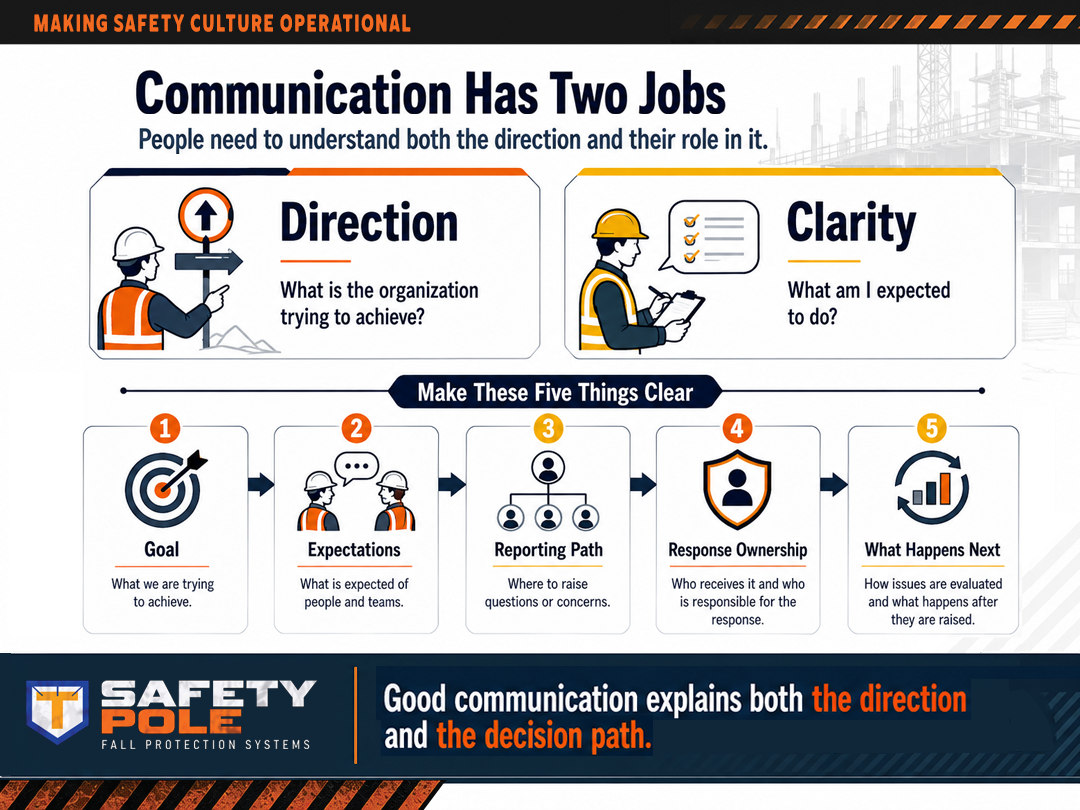
Safety communication has two jobs.

People need to understand what the organization is trying to achieve, and they need to understand what they are expected to do.

That means leadership should communicate more than a general commitment to safety. It should make the direction, expectations, and responsibilities clear enough to guide actual decisions.

Effective safety communication should make clear:

  • what the organization is trying to achieve;
  • what leaders expect from supervisors and workers;
  • how concerns should be raised;
  • who is responsible for responding;
  • what happens after an issue is identified.

That communication can happen through training, safety meetings, written procedures, direct supervisor communication, or regular leadership updates.

The form can vary. The important part is continuity.

If a concern is raised, people should know what happened next. If a safety initiative changes, they should understand what changed and why. If a worker or team makes a useful contribution, that effort should be acknowledged.

That closes the loop between what leadership says and what people see happen.

Supervisors Carry the Expectation Into the Work

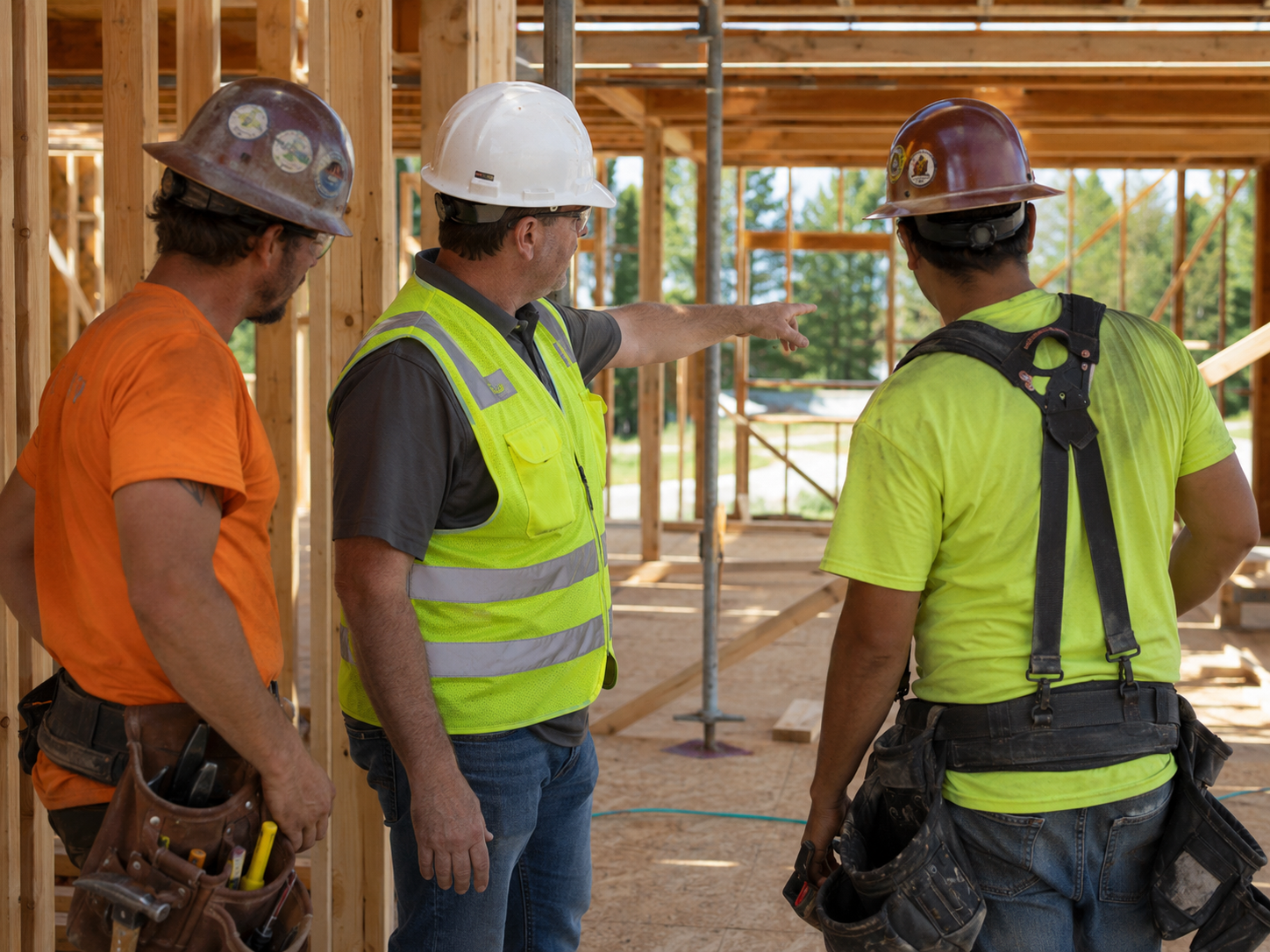
Most workers experience leadership through the supervisors and managers closest to the work.

That makes field leadership an important bridge between organizational expectations and actual working conditions.

If executive expectations and field expectations conflict, the field will usually respond to the expectation with the most immediate consequence.

A supervisor may understand that safety matters but still need clear support when a condition requires attention. If leadership expects supervisors to encourage reporting, address hazards, and apply safety practices consistently, those expectations have to remain credible when other pressures are present.

Leadership cannot establish one standard at the organizational level and leave supervisors to absorb the consequences of applying it on their own.

The people carrying those expectations into the work need enough clarity and support to act on them.

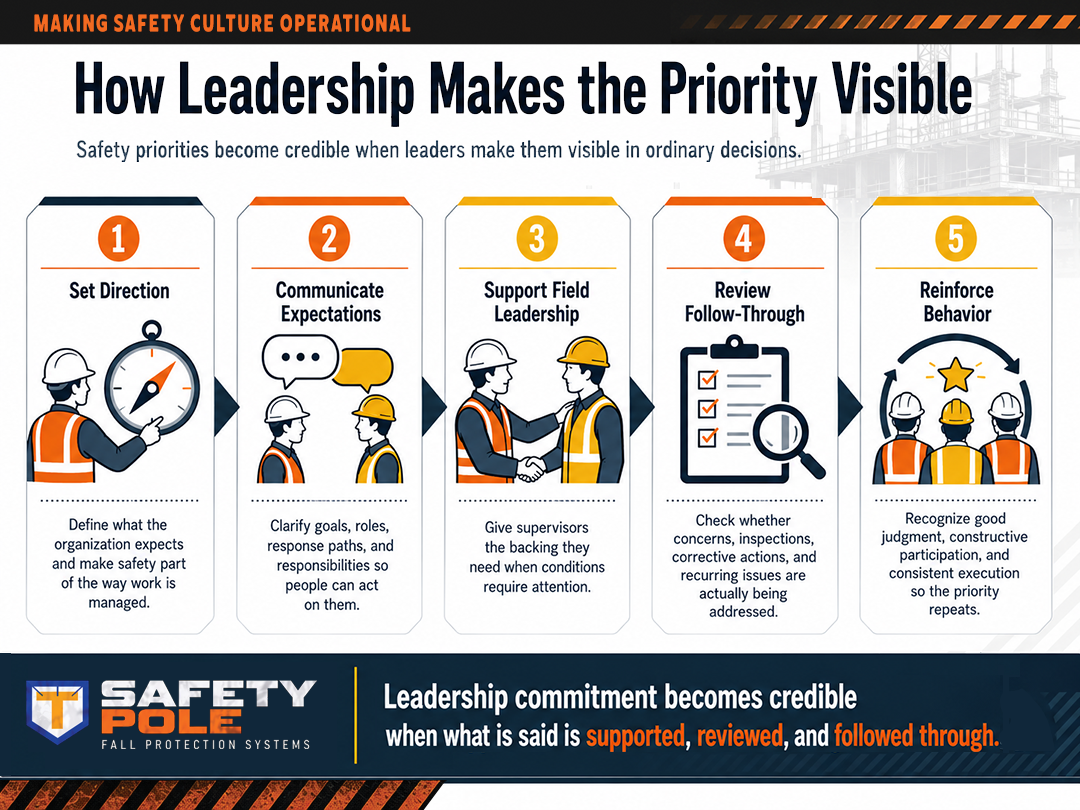
Leadership commitment becomes credible when safety is reflected in the decisions leaders make, the expectations they communicate, and the responsibilities they are willing to own.

Field leadership an important bridge between organizational expectations and actual working conditions.
Source: S.P. Graphics

Accountability Makes Leadership Responsibility Visible

Organizations hold leaders accountable for the things they consider important.

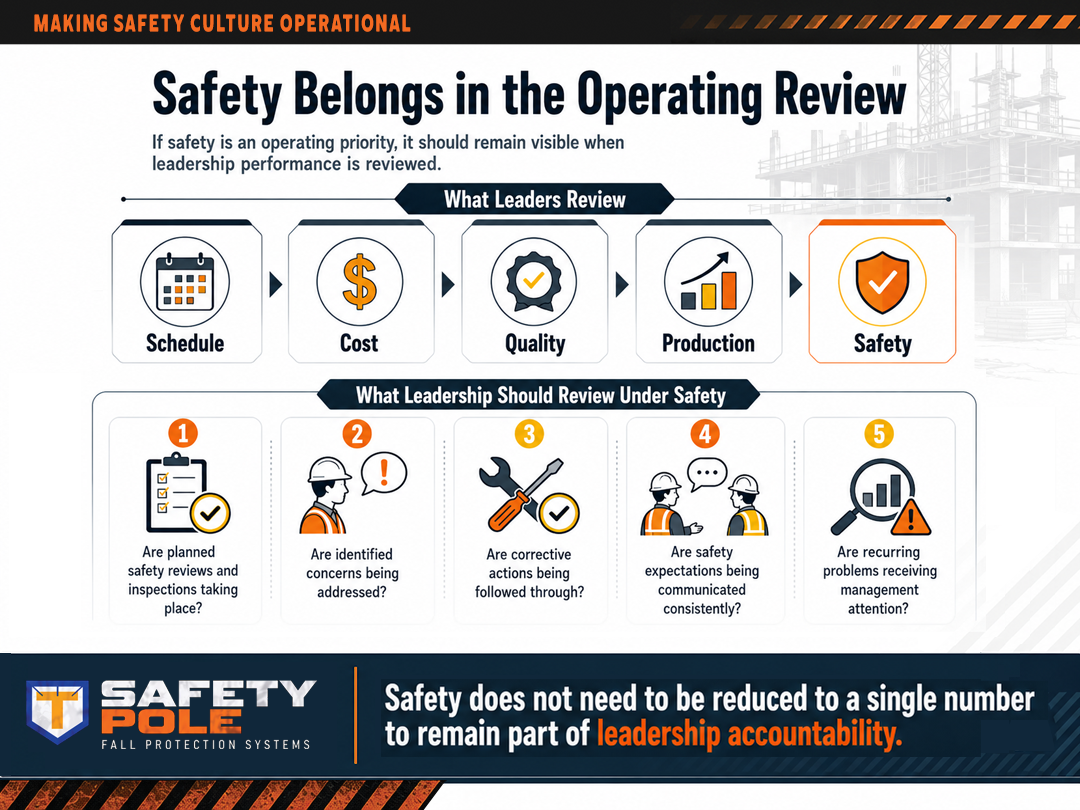
Schedule gets reviewed. Cost gets reviewed. Quality gets reviewed. Production gets reviewed.

If safety is also an operating priority, leadership accountability should reflect it.

That does not require reducing safety to a single number.

Leadership accountability can include questions such as:

  • Are planned safety reviews and inspections taking place?
  • Are identified concerns being addressed?
  • Are corrective actions being followed through?
  • Are safety expectations being communicated consistently?
  • Are recurring problems receiving management attention?

These questions make leadership responsibility specific.

They also create a way to distinguish between saying safety matters and actually managing it.

If leaders are evaluated on operational performance, their safety responsibilities should be visible in that evaluation as well. That does not require one universal metric or a particular performance system. It means safety should not disappear from consideration when leadership performance is reviewed.

When leaders ask about unresolved issues, follow up on corrective actions, review whether safety expectations are being carried out, and expect the same attention from the managers below them, safety becomes part of ordinary leadership responsibility.

Reinforce What You Want People to Repeat

People pay attention to what leaders recognize and what they tolerate.

If a worker identifies a legitimate problem and leadership responds constructively, that teaches something.

If a supervisor addresses a condition and receives support, that teaches something too.

Recognition helps reinforce those patterns.

When someone identifies a problem, contributes to an improvement, helps another worker understand a procedure, or supports a better safety decision, acknowledging that contribution shows that participation is noticed—not merely requested.

Recognition does not have to be elaborate. It can happen in a crew meeting, through direct supervisor feedback, or through a more formal program.

What matters is consistency.

If concerns disappear without response, recurring issues remain unresolved, or expectations change whenever other pressures increase, people learn from that pattern.

If good judgment, follow-through, and constructive participation are reinforced consistently, people learn from that too.

Leadership establishes the priority.

Supervisors carry it into the work.

Workers see whether it holds.

Leadership Commitment Has to Be Observable

A safety policy can tell people what the organization intends.

Leadership behavior tells them what the organization is prepared to support.

That difference becomes visible in ordinary decisions: whether a concern gets heard, whether a condition gets corrected, whether a supervisor has room to act, whether leadership follows up, and whether safety remains part of the way leaders themselves are evaluated.

You do not establish that credibility once.

You establish it through repeated decisions, clear communication, consistent follow-through, and accountability.

If safety is going to function as an organizational priority, leadership has to make that priority visible in the way the work is managed.

People will hear what you say.

They will decide what matters by watching what you do.

The Jobsite Standard

Summer 2026

Jobsite Standard - Economics of the Jobsite

Standards in Practice

Safety Leadership Shows Up in the Decisions You Make

August 25, 2026

By SP Editorial Team

People will hear what you say. They will decide what matters by watching what you do.
This Article is In the Series Building a Safety Culture

Business Risk Starts With the Work

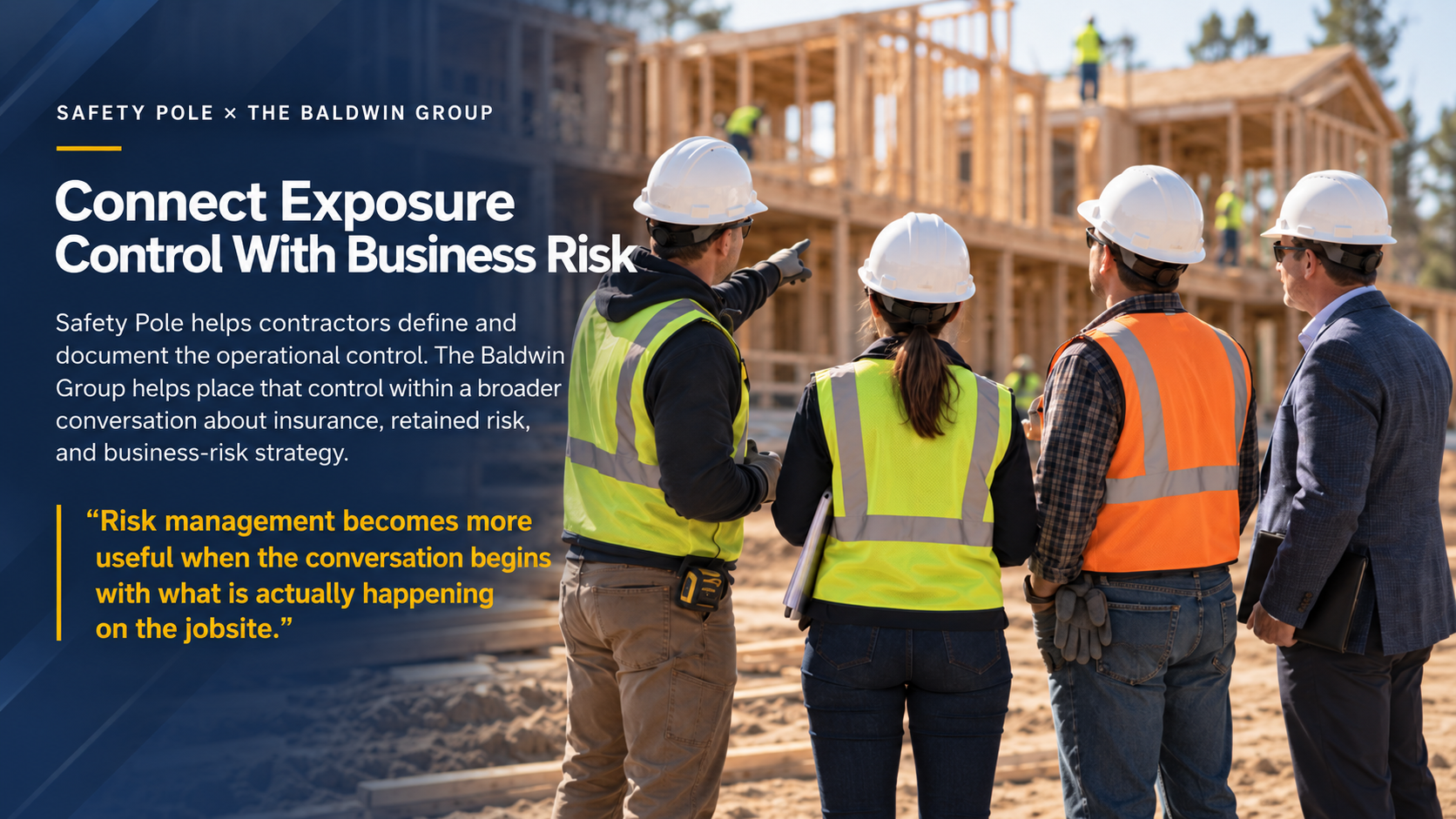
Business risk is not only about what happens after an incident. It also includes the physical controls, planning, documentation, and operating decisions made beforehand. See where fall protection fits into that larger conversation; and why managing the exposure starts with the work itself.

If you found this article useful, you may wish to receive future issues of The Jobsite Standard. Our email edition shares selected articles, field insights, and updates on safety practices relevant to working at height.

Let's Talk About Your Jobsite

Every project presents unique challenges.

Whether you're evaluating fall protection options, planning an upcoming project, or looking for guidance on creating a safer work environment, our team is here to help.

Send us a message and a Safety Pole representative will contact you to discuss your questions and project needs.

Name
Tell us about your project, safety concerns, fall protection requirements, or any questions you have for our team.

Your information will only be used to respond to your inquiry. We do not sell or share your information with third parties.

Dedicated to Getting Workers Home Safely