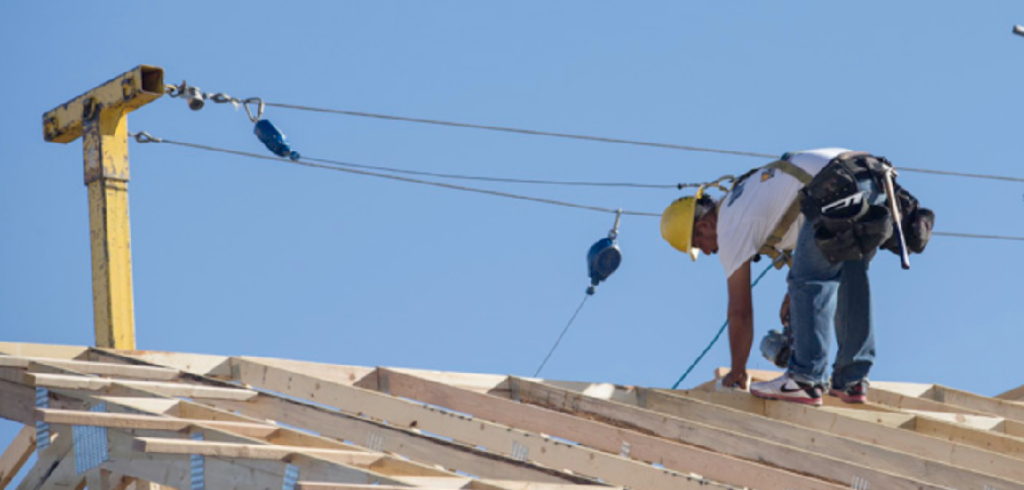
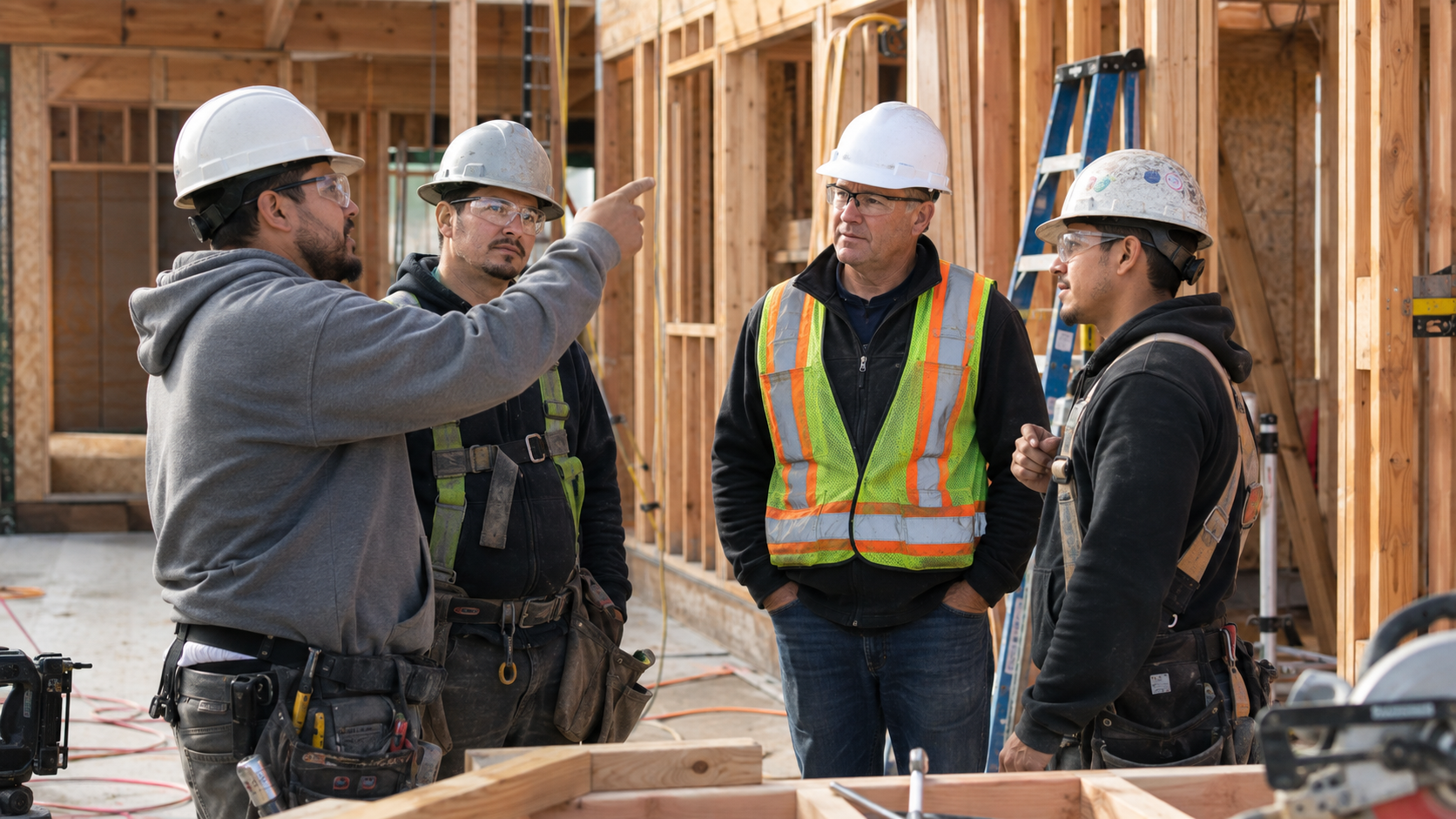
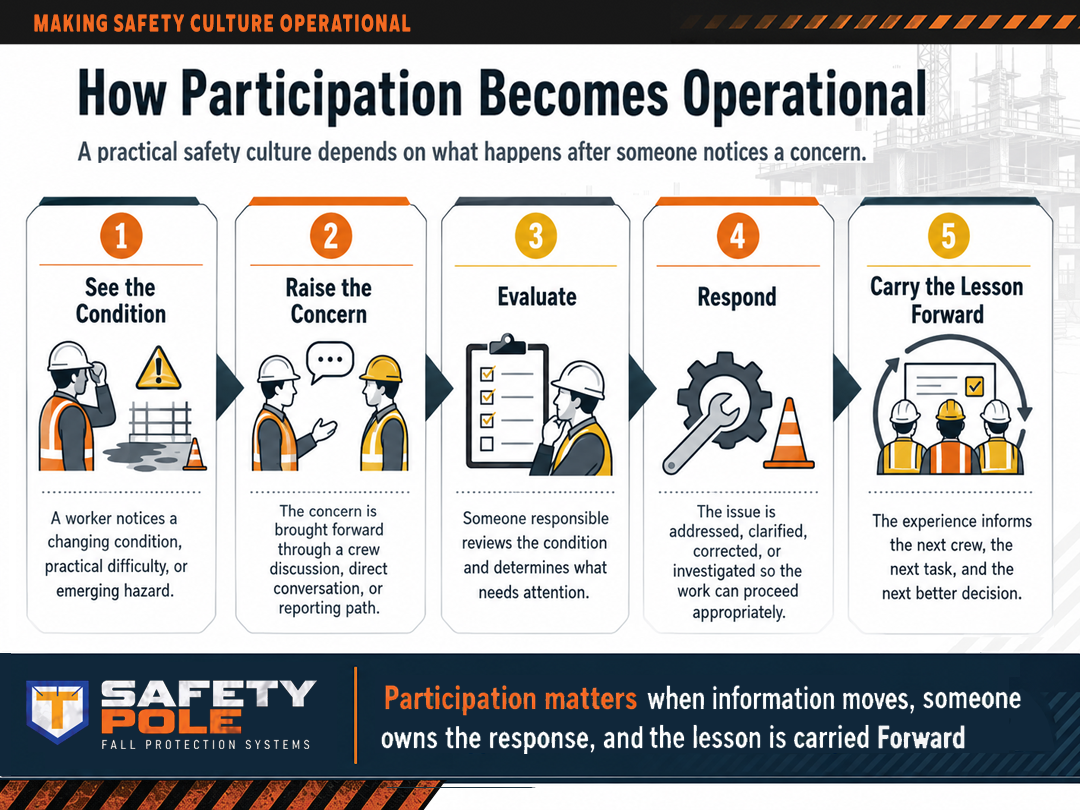
The people closest to the work encounter changing conditions every day. They see practical difficulties, emerging hazards, and places where a written procedure does not fully match the work in front of them.
That information only becomes useful when it moves.
If you tell people that safety is everyone’s responsibility but give them no meaningful way to contribute what they see, much of the available field knowledge stays outside the process.
The people performing the work are not only recipients of procedures. They are also a continuing source of information about how those procedures work under actual conditions.
That does not mean every observation requires a policy change or that every recommendation is automatically correct. It means there is a way to raise the issue and someone is responsible for evaluating it.
Organizations use different ways to gather worker input: crew meetings, direct conversations with supervisors, safety committees, reporting systems, surveys, or other feedback channels.
The specific method matters less than whether it works.
Whatever method you use, workers should understand:
A safety committee can be useful because it brings different perspectives into the same discussion. A crew meeting can do the same thing on a smaller scale. Sometimes a direct conversation with a supervisor is the fastest route.
But asking for input is not enough.
A suggestion nobody reviews is not participation. A committee that never influences a decision is not much better. If people repeatedly raise issues and see nothing happen, they learn that the process is procedural rather than meaningful.
Someone has to own the response.
That response does not always have to be agreement. A concern may require investigation. The existing practice may turn out to be appropriate. The condition may be corrected immediately.
What matters is that the issue is actually considered and that the person raising it can see that it entered the process.

This is where many safety programs are tested.
It is easy to tell workers to report unsafe conditions. It is harder to create an environment in which doing so feels like a normal part of the job.
The schedule is moving. Other work may be waiting. A supervisor may be trying to keep a crew productive. The condition may not look serious enough to justify interrupting the work. The worker may not know whether anyone else sees the same problem.
If speaking up is treated as an inconvenience, people notice.
If you expect workers to raise concerns, the reporting path has to be clear and the response has to be credible. Supervisors need to know what they are expected to do when someone raises an issue. Workers need to understand that a legitimate concern can be evaluated without the act of raising it being treated as a failure of production.
If a condition requires the work to be interrupted while it is evaluated, that possibility should be understood before the moment arrives.
This does not mean every concern receives the same response or that every worker independently decides policy. It means you need a practical way to interrupt, evaluate, and resolve a condition when someone believes the work requires attention.
If you ask people to speak up, you have to be prepared to listen and respond.
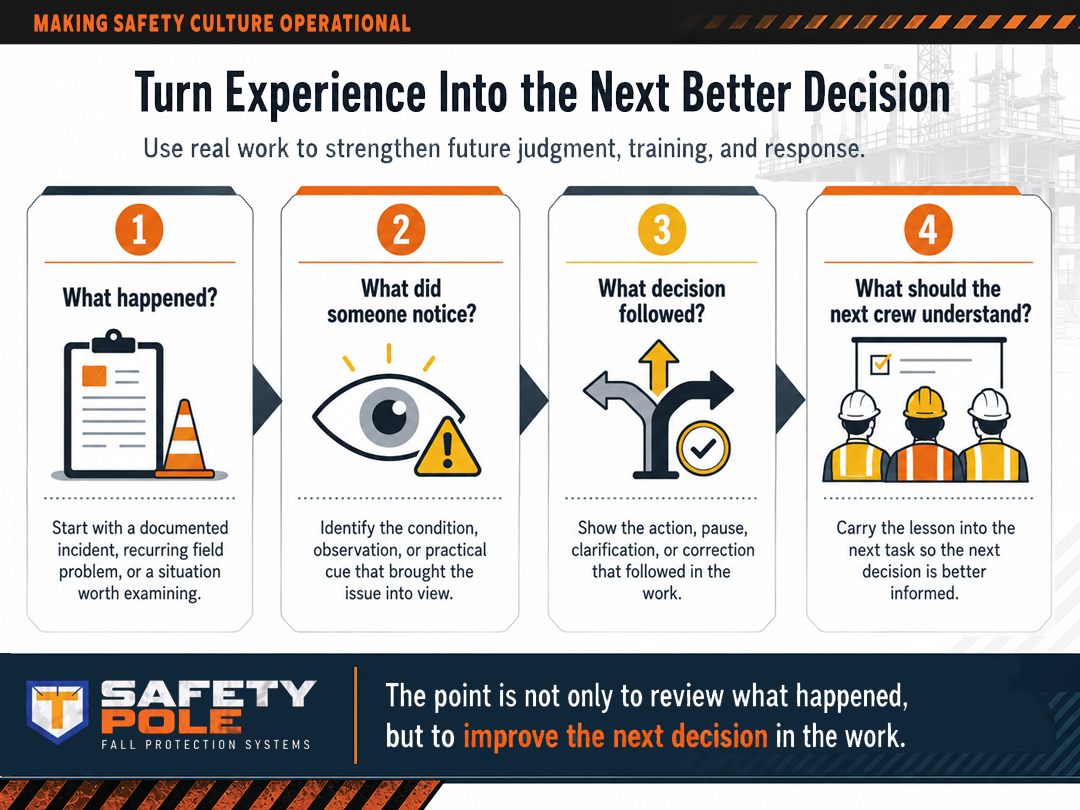
Real project experience can make safety discussions more useful because it gives people something concrete to examine.
A documented incident, a recurring field problem, or a situation in which a safety practice worked as intended can help connect the written expectation to recognizable work.
A useful discussion can ask:
The point is to make the next decision better.
That same approach can strengthen training. Instead of treating training only as information delivered from management to workers, you can use recognizable work conditions to show how procedures apply and where additional clarification may be needed.
Training is most useful when it stays connected to the work people actually perform.
What you recognize tells people what you value.
When a supervisor recognizes someone for identifying a problem early, asking a necessary question, contributing a practical improvement, helping another worker understand a procedure, or raising a concern before the work continues, the organization is reinforcing the kind of participation it wants to see.
Useful recognition can reinforce behaviors such as:
The emphasis should stay on the behavior being reinforced rather than on any particular incentive structure.
Recognition does not have to be elaborate. It can happen in a crew meeting, in a supervisor’s feedback, or through a more formal program.
The form matters less than the message.
If workers hear only about production, they notice. If safety conversations happen only after something goes wrong, they notice that too. If good judgment and constructive participation are treated as part of doing the job well, that becomes visible.
Broader worker-support efforts can reinforce that same message. Wellness resources do not replace hazard control, supervision, training, or sound procedures, but they can support an organizational culture in which worker well-being is taken seriously.
There is no single meeting, committee, reward program, or training exercise that creates a safety culture.
You see it in what happens during an ordinary workday.
When someone identifies a problem, can they raise it?
When conditions change, does the information move?
When a concern requires attention, can the work be interrupted long enough to understand it?
When someone demonstrates sound judgment, does the organization reinforce that behavior?
Those questions tell you more than a policy statement can.
You can write the procedure. You can establish the expectation. You can tell people that safety matters.
But if you want that expectation to survive contact with changing work, the people doing the work have to be part of it.