DEDICATED TO GETTING WORKERS HOME SAFELY SINCE 2004

Engineered Fall Protection for Real-World Jobsites

Equip Your Team with Confidence

For questions, concerns, or guidance on the Safety Pole system or fall-safety implementation, contact us.

© 2004–2026 Safety Pole, Inc.

The

JOBSITE STANDARD

Built on Safety. Set as Standard. The Safety Pole Perspective

Applied Safety

Plan the Anchorage Before the Work Moves

Fall protection works best when anchorage is planned as part of the construction sequence rather than added after the work area changes.

By SP Editorial Team

Published in J.S. Safety Insights, Jobsite Standard

Plan the Anchorage Before the Work Moves

Construction changes by phase, elevation, and work area. A practical fall-protection plan anticipates where usable anchorage will be needed before crews arrive at the next elevated condition.

Construction does not hold still long enough for fall protection to be treated as a one-time setup decision.

A framing project changes as the structure changes. Crews move from one work area to another. Working elevations change. Walls go up, floors are established, upper levels become active, and roof work follows. The location and character of the exposure can change because the building itself is progressing.

That movement is one of the basic realities a fall-protection plan has to address.

The practical question is not only whether fall-protection equipment is available. It is whether the job has planned usable protection for the work that is coming next.

Source: Safety Pole Photo Archive

The work area does not stay put

A safety plan can look complete on paper and still become difficult to use if it does not account for the sequence of construction.

Protection that made sense for one phase may not be positioned for the next. Access changes. Materials move. Crews shift. New edges and elevated work areas appear as the structure develops.

That does not mean the answer is to improvise every time the work changes. It means the change itself should be expected.

Construction changes by phase. Fall-protection planning has to account for that movement before the work gets there.

A useful planning conversation therefore looks ahead. What work is coming next? Where will crews be working? What elevated exposure will exist at that stage? What approved protection will be available before that work becomes routine?

Those questions belong in production planning because the need for protection is connected to the way the work advances.

Anchorage belongs in the sequence

Anchorage is often discussed as a hardware question: where can a worker connect?

That matters, but the planning issue is larger.

The useful planning question is not only whether protection is available. It is whether usable anchorage will be where the work is going next.

When anchorage is considered early, the contractor has an opportunity to coordinate protection with the active work area, the structure, access, supervision, worker movement, and the project-specific fall-protection plan.

That approach is different from waiting for an elevated condition to appear and then trying to fit protection around work that is already underway.

Safety Pole can be incorporated into that kind of planning. Under current public-use authority, the Safety Pole System may be described as a portable, modular, engineered fall-protection system designed to integrate anchorage and horizontal-lifeline support with the way elevated construction work is planned and performed.

That description does not make Safety Pole a complete safety program. It identifies the role of the equipment inside one.

Construction changes by phase. Fall-protection planning has to account for that movement before the work gets there.

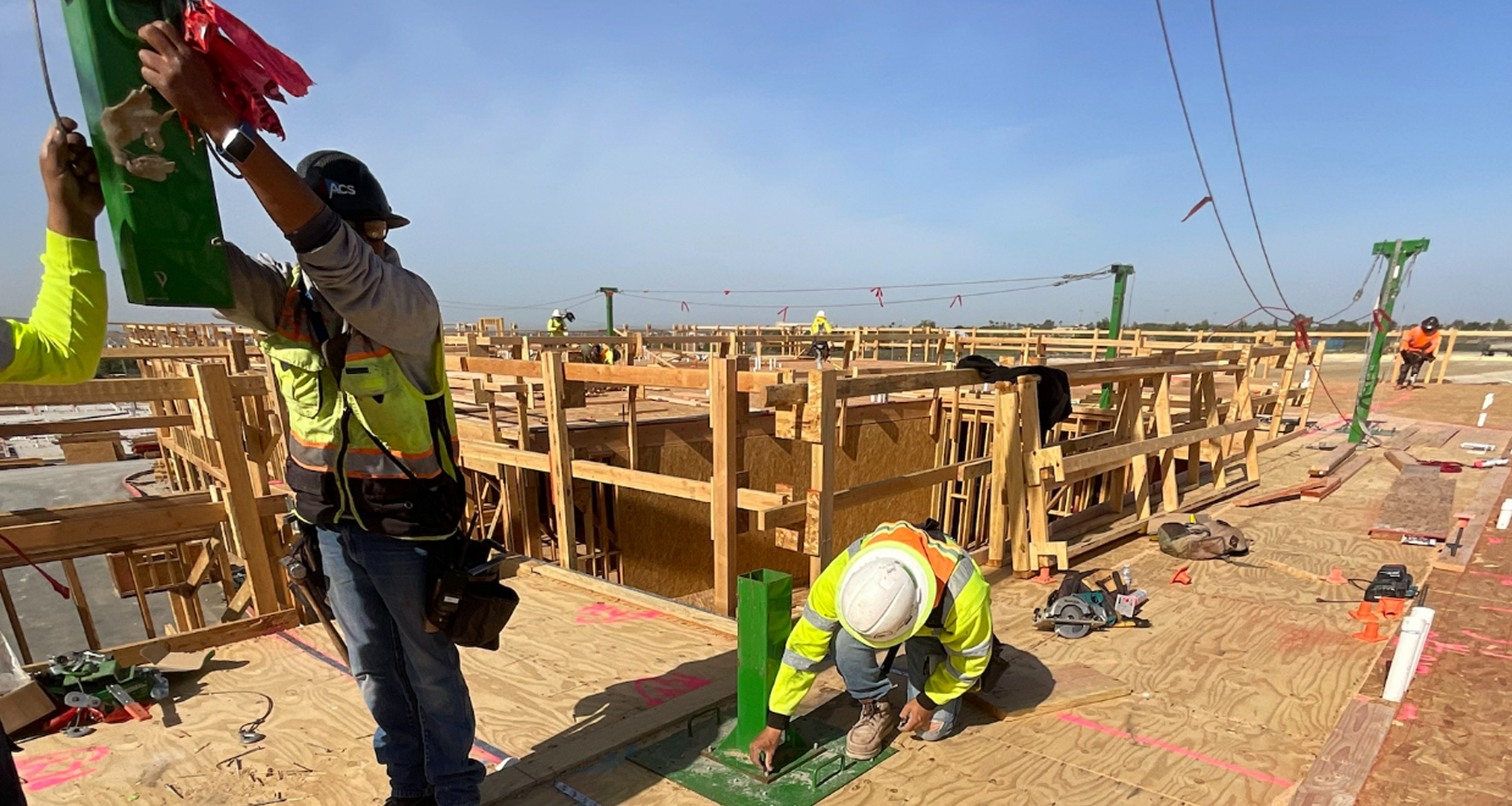
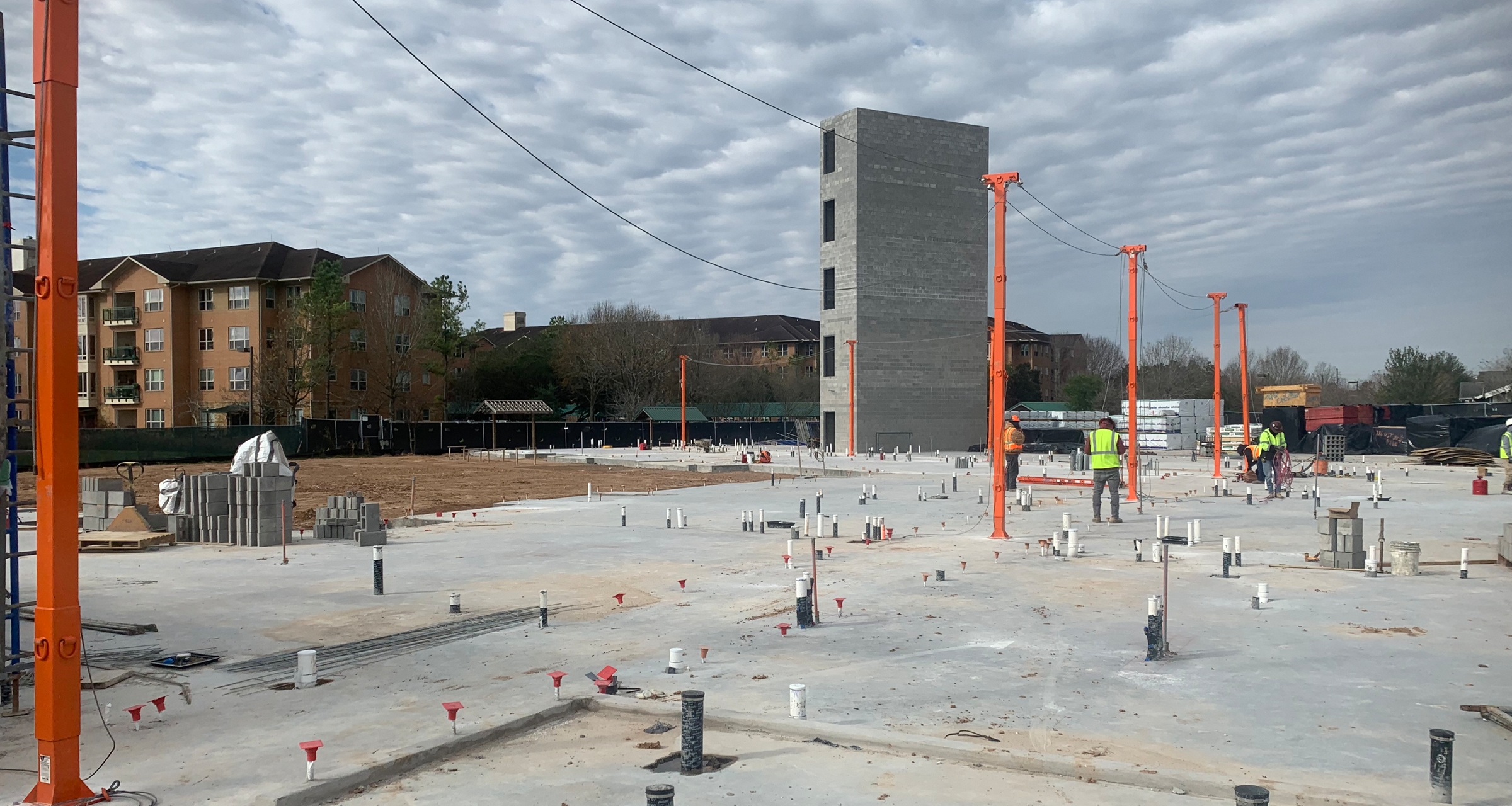
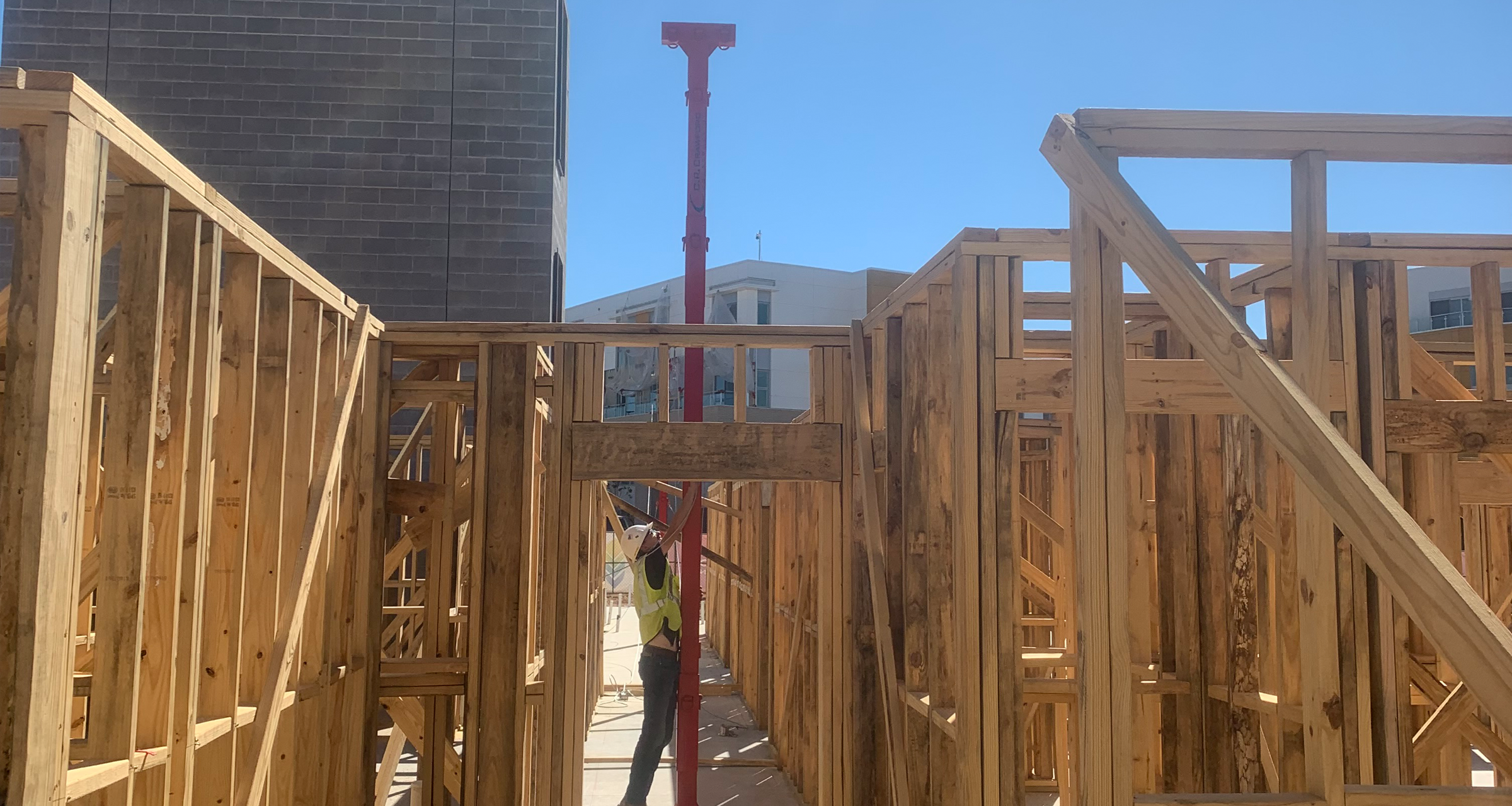
Setting up Safety Pole systems on the jobsite
Source: S.P. Photo Archive

Different phases may call for different deployment decisions

The Safety Pole System can be discussed through several distinct planning classifications.

Single Anchor and Horizontal Lifeline describe deployment or use. MUF and Traditional describe system or package configuration. Residential and Commercial describe application context.

Those distinctions are useful because they keep planning from collapsing into a single generic idea of “putting up a pole.”

A project may require different decisions as the work progresses. An individual Safety Pole vertical unit may be used in a Single Anchor deployment for an approved condition. Multiple Safety Pole vertical units may form part of an HLL deployment under the applicable approved plan and technical controls.

The correct choice remains project- and configuration-specific. General editorial content should not infer worker counts, spans, capacities, connection geometry, mounting details, or technical limits from the configuration name alone.

The planning principle is simpler: identify the upcoming work, resolve the approved protection for that condition, and establish it before the exposure becomes part of normal production.

Progression should be deliberate, not assumed

Safety Pole authority also supports describing the system as relocatable or reconfigurable as work progresses, with qualification.

That qualification matters.

Moving or reconfiguring a fall-protection system is itself a work phase. The new condition has to be reviewed. The appropriate mounting and configuration have to be resolved under current instructions. The completed installation has to be verified before use. Alternate approved protection may be required while the system is being moved or re-established.

So “moves with the work” should not be understood as automatic continuity or a promise that protection somehow follows a crew without planning.

A better way to think about progression is this: the contractor anticipates the next phase, plans the protection for that phase, and manages the transition deliberately.

That is a production-sequence mindset rather than an improvisational one.

One physical control inside a larger program

Safety Pole is most useful when it is treated as part of a planned fall-protection approach rather than as a stand-alone answer to every elevated condition.

The employer’s broader program still governs the work. Project planning, compatible personal fall-arrest equipment, trained personnel, inspection, supervision, maintenance, documentation, and project-specific review remain part of the system of controls around the equipment.

That broader context is important because good equipment cannot compensate for missing planning or unsupported assumptions.

The same discipline applies when the work changes. A change in elevation, structure, access, sequence, environment, or configuration should trigger review rather than automatic continuation.

In practical terms, that means fall-protection planning should travel with the production conversation. If the team is discussing where framing, sheathing, trusses, or other elevated operations will move next, it should also be discussing how approved protection will be available there.

Planning earlier reduces the need to solve the same problem late

There is a basic operational advantage to asking the anchorage question early.

When protection is planned before the next work phase begins, the contractor has more room to coordinate the system with the work rather than forcing the work and protection into conflict after the fact.

That does not guarantee uninterrupted production, eliminate exposure, or replace project-specific safety judgment. It simply puts the fall-protection decision where it belongs: in the same planning window as the work that creates the need for it.

The principle is straightforward.

Construction progresses. The work area changes. Fall-protection planning should anticipate that movement.

Treat anchorage as part of the sequence, review the next condition before crews arrive there, and keep the physical system connected to the broader program responsible for how the work is actually performed.

Talk with Safety Pole about how anchorage planning can be evaluated for the way your projects progress from one phase and elevation to the next.

The Jobsite Standard

Summer 2026

Jobsite Standard - Economics of the Jobsite

Applied Safety

Plan the Anchorage Before the Work Moves

August 12, 2026

By SP Editorial Team

The useful planning question is not only whether protection is available. It is whether usable anchorage will be where the work is going next.

Business Risk Starts With the Work

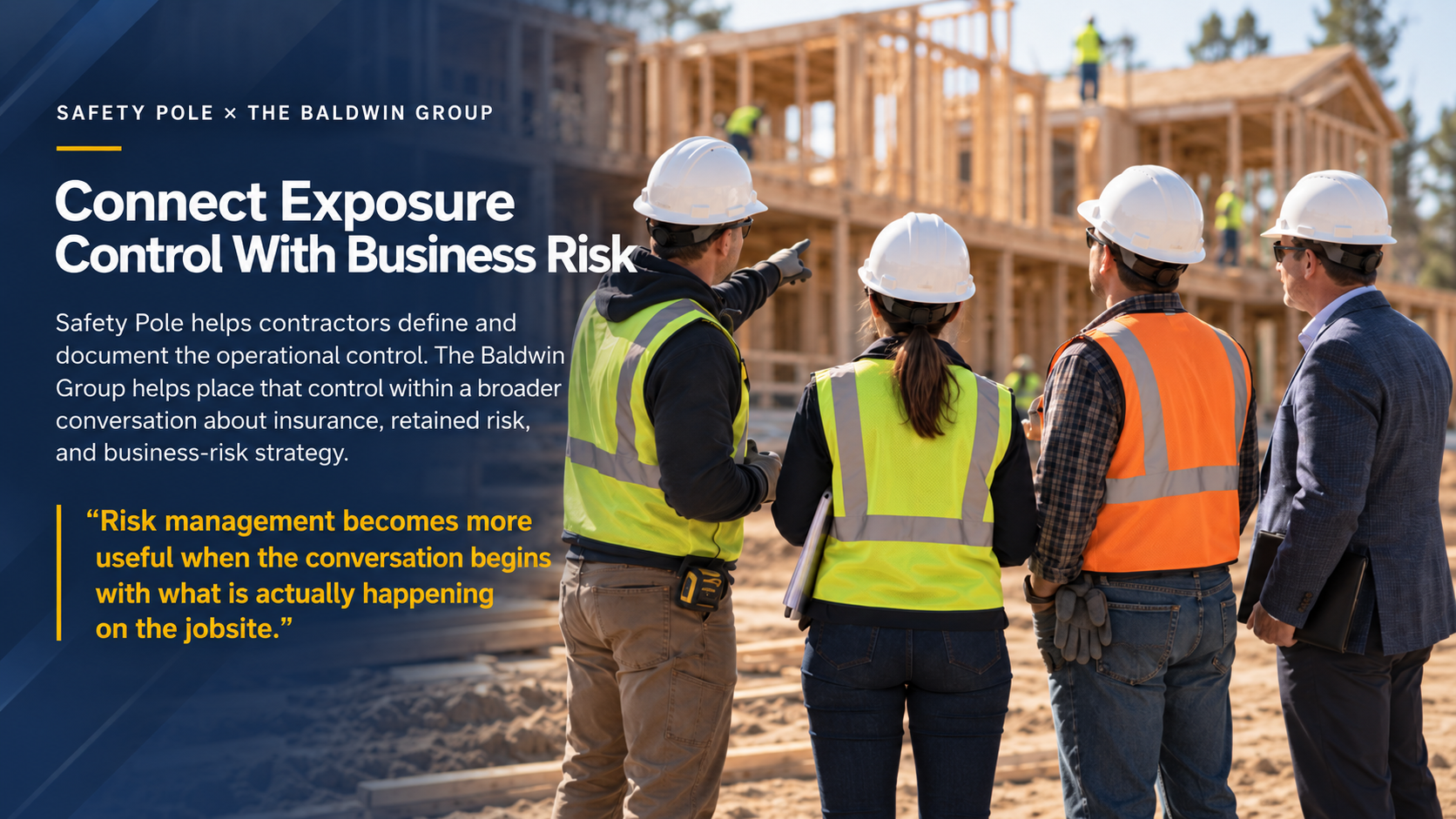
Business risk is not only about what happens after an incident. It also includes the physical controls, planning, documentation, and operating decisions made beforehand. See where fall protection fits into that larger conversation; and why managing the exposure starts with the work itself.

If you found this article useful, you may wish to receive future issues of The Jobsite Standard. Our email edition shares selected articles, field insights, and updates on safety practices relevant to working at height.

Let's Talk About Your Jobsite

Every project presents unique challenges.

Whether you're evaluating fall protection options, planning an upcoming project, or looking for guidance on creating a safer work environment, our team is here to help.

Send us a message and a Safety Pole representative will contact you to discuss your questions and project needs.

Name
Tell us about your project, safety concerns, fall protection requirements, or any questions you have for our team.

Your information will only be used to respond to your inquiry. We do not sell or share your information with third parties.

Dedicated to Getting Workers Home Safely