One System, Different Ways of Using It
The Safety Pole System can be understood through several separate ideas that should not be collapsed into one another.
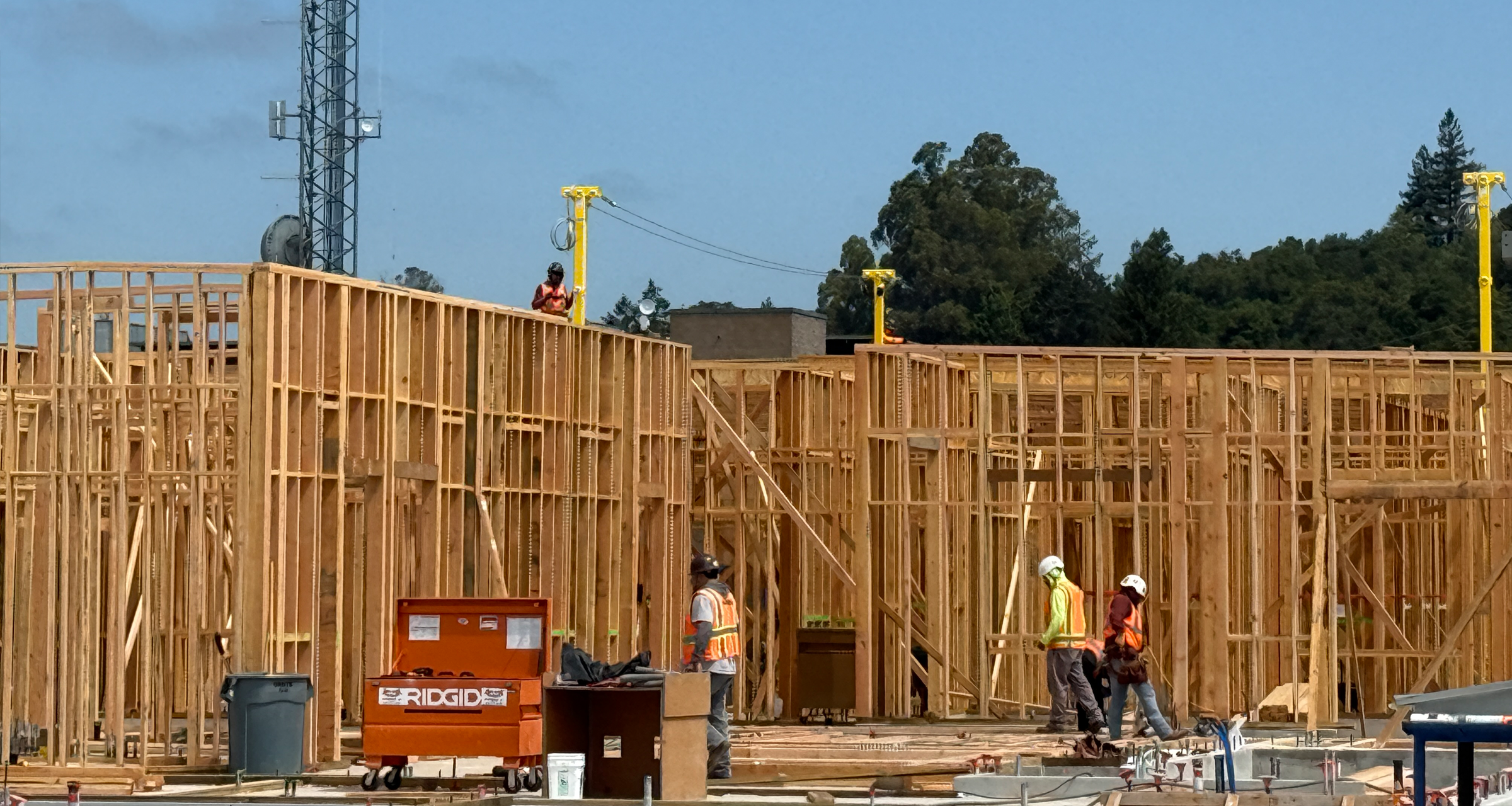
The system can be deployed as a Single Anchor, where an individual Safety Pole vertical unit provides a jobsite anchorage point for the worker’s applicable personal connection, or as a Horizontal Lifeline (HLL) configuration, where multiple Safety Pole vertical units support the applicable horizontal lifeline arrangement for the intended working span.
One system can support different configurations, applications, and deployment methods without losing its identity as one system family.
The system can also be organized through its principal MUF and Traditional configurations. The MUF configuration is associated with moving the Safety Pole System upward through construction as the work progresses—a field progression commonly referred to as Leapfrog.
Residential and Commercial, in turn, describe application contexts rather than separate product families.
Keeping those distinctions clear is useful because they answer different planning questions:
The Safety Pole System.
- What system is being used?
MUF or Traditional, according to the applicable project requirements.
- What configuration is appropriate to the work?
Single Anchor or HLL, according to the planned use.
- How is the system being deployed?
In the applicable Residential or Commercial construction context.
- Where is it being applied?
That vocabulary gives the team a more precise way to discuss what is actually being planned.
The System Is Not the Safety Program
A physical system can make planning more concrete, but it does not replace the broader fall-protection program.
The system is not the safety program; it is infrastructure the safety program can organize around.
Worker training still matters. Inspection still matters. Competent supervision still matters. Personal fall-arrest equipment still matters. Rescue planning, worker participation, and the evaluation of actual project conditions still matter.
Safety Pole’s role is more specific: it provides modular fall-protection infrastructure that can be incorporated into the construction process itself.
That distinction is important because the presence of equipment should never be mistaken for the completion of the safety process. The equipment has to be part of a plan that people understand and execute consistently.
For the worker, that means knowing the intended system and connection approach for the work.
For the foreman or superintendent, it means understanding how anchorage and worker movement relate to the way the area is set up.
For the safety team, it means having a defined physical system that can be incorporated into training, inspection, and jobsite procedures.
For the contractor, it means being able to discuss fall protection as part of the production environment rather than as a separate problem that appears only when an exposure is encountered.
Reassess When the Work Changes
A useful plan should tell the team when to stop relying on the previous setup and reassess the next stage.
A simple operational rhythm looks like this:
Identify the active area, anticipated exposure, and applicable fall-protection approach.
- Plan the work.
Follow the current installation and project requirements governing the chosen configuration and deployment.
- Establish the system for that stage.
Maintain the required training, inspection, supervision, personal equipment, and worker practices.
- Perform the work under the established plan.
Identify when the work area, elevation, structure, or operation has changed enough that the previous plan should no longer be assumed to apply.
- Recognize the transition.
Evaluate the next work condition and establish the appropriate fall-protection arrangement for it.
- Re-establish the next stage deliberately.
The value of this sequence is not that five steps solve every project condition. The value is that the next change in the building has already been recognized as something the fall-protection plan must address.
Make It a Repeatable Jobsite Conversation
The strongest operational benefit of a planned system may be the common language it gives the people responsible for the work.
A superintendent can ask what configuration is planned for the next stage. A safety professional can confirm how the system fits the applicable procedures and training. A foreman can review the intended work area and connection approach with the crew. An operations leader can evaluate whether the project has a repeatable method for addressing the same class of exposure as construction progresses.
A repeatable plan gives the jobsite a common reference point for setup, training, inspection, supervision, and the next stage of work.
That does not eliminate judgment. It gives judgment a structure.
It also reinforces an important distinction between planning and improvisation. Construction will always contain changing conditions, but change does not have to mean that the fall-protection strategy begins again from zero every time the work moves.
A defined system, a clear vocabulary, and a deliberate transition process give the team something to work from.
Build the Next Safety Decision Into the Current Plan
The central idea is straightforward: the fall-protection plan should account for the way the building is actually going to be constructed.
When the work moves upward, the plan should already anticipate that movement. When the active area changes, the team should know that a new evaluation is required. When the system is repositioned or re-established, that action should occur under the applicable current installation and project requirements rather than by assumption.
Safety Pole provides a modular physical system that can participate in that process.
It does not replace the contractor’s safety program. It gives that program infrastructure around which planning, worker connection, training, inspection, supervision, and jobsite procedures can be organized.
The more clearly that relationship is established before the next exposure appears, the less likely fall protection is to be treated as an isolated response to a jobsite that has already changed.
The work moves.
The plan should be ready to move with it.