Safety starts with Safety Pole
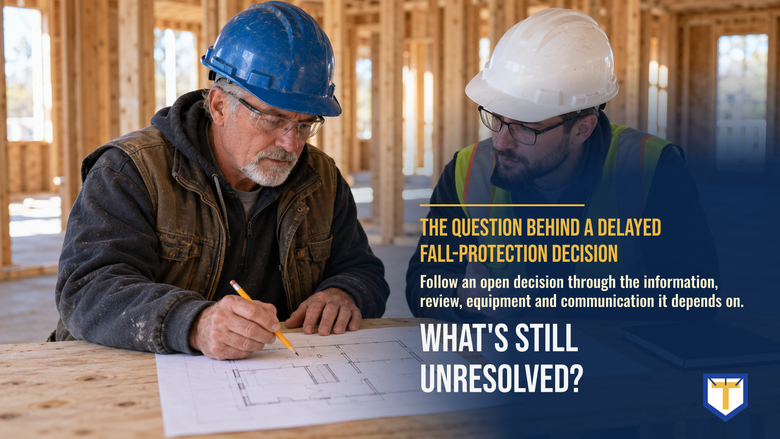
Follow an open decision through the information, review, equipment and communication it depends on.
“Fall protection still to be resolved” names an open item without explaining what the person answering it still needs. Before you chase the answer again, look at the question your team has actually asked.
Consider a hypothetical planning situation. An overhead installation is coming up on an upper floor, and the work plan still needs an appropriate protection arrangement. The schedule describes the installation, but the review request does not show where people will stand or how they will reach the work. No protection method has been selected for this illustration.
The decision is open for a specific reason within this example: the person being asked to evaluate the arrangement does not yet have a sufficiently clear description of the task. That gives the superintendent something concrete to resolve. It does not establish why decisions become delayed on construction projects generally.
In the illustration, the foreman explains that some of the installation points are near an unfinished stair opening. That information changes the review request. The superintendent now needs the proposed work positions, access and relevant surrounding conditions described clearly enough for the responsible safety or technical reviewer to evaluate them.
The foreman contributes knowledge of the assignment. The superintendent coordinates the information and the review. Neither role automatically supplies the technical determination that may be needed. Asking an experienced crew how it expects to perform the work is useful; treating that answer as approval of the arrangement goes further.
OSHA’s fall-prevention campaign places advance planning around the tasks involved and the equipment needed. Applied here, that means getting the work description into the planning conversation before treating the protection question as ready for a final answer. The campaign guidance does not select equipment for this hypothetical installation.
We can now describe the open item more accurately: the work positions and access need clarification before the appropriate reviewer can complete the assessment. That is different from a general reminder to “sort out fall protection.”
With the work information assembled, the superintendent routes the revised question to the person or function authorized to assess it under the project’s processes. If a product, engineering or compatibility determination is needed, it goes to that authority. An equipment provider can supply current product information without being assumed to hold every project-specific decision.
An unresolved technical question stays unresolved until the appropriate authority answers it. A confident instruction in the work plan cannot substitute for the missing determination.
The same illustration can move forward without inventing the answer. Suppose the responsible review identifies an appropriate arrangement, with the conditions and instructions that govern it. That is a hypothetical stage in the planning sequence, not an endorsement of any particular method. The superintendent’s next task is to establish what still has to be in place for that arrangement to be used.
The technical review and the equipment question now have different statuses.
In our example, the necessary equipment has been requested, but its availability for the assignment has not been confirmed. The technical review and the equipment question now have different statuses. Reopening the technical question will not establish when the equipment will be available.
The provider or responsible equipment coordinator needs to confirm the relevant information through the project’s normal process. If that answer is still outstanding, keep it visible as an equipment-readiness dependency. A request sent is not equipment received, and equipment received is not proof that every condition for its intended use has been satisfied.
A short coordination note can preserve these distinctions: what work is affected, which decision has been reached, which condition remains open and who is obtaining the next answer. Those are suggested working details, not a prescribed regulatory form or an authorization to proceed while protection remains unresolved.
Now suppose the relevant review and readiness questions in the illustration have been resolved through their proper routes. The planning thread still needs to reach the people doing the work. The foreman needs the current arrangement and its limits, and the affected workers need the information and applicable training for their assignment.
A decision communicated to the superintendent does not establish that the crew has received it. If other work affects the area or access, the relevant people also belong in the coordination. The question at this stage is whether the current information has reached those who need it, rather than whether the original request was answered.
OSHA’s recommended safety-program practices address communication and coordination among employers, including work planning and information exchange when conditions change. That supports the coordination principle here without assigning contractual responsibility or creating a universal handoff procedure.
Keep the relevant instructions retrievable. If the task or surrounding conditions have changed while the review was underway, check whether the answer still addresses the work now proposed.
The hypothetical situation has followed one assignment through several dependencies: a clear work description, the proper review, equipment readiness and field communication. Each required a different answer. None demonstrates an industry-wide behavioral cause of delay or promises a schedule improvement.
For your next open decision, identify the stage you have actually reached. Who needs to provide information? Who is authorized to make the determination? What remains to be established before the arrangement can be used for the work?
A more precise open item tells your team which answer to seek next. In this illustration, clarifying the work, completing the authorized review, establishing equipment readiness and informing the crew are separate dependencies. Knowing which one remains open gives the next request a purpose.
Other JS Editions
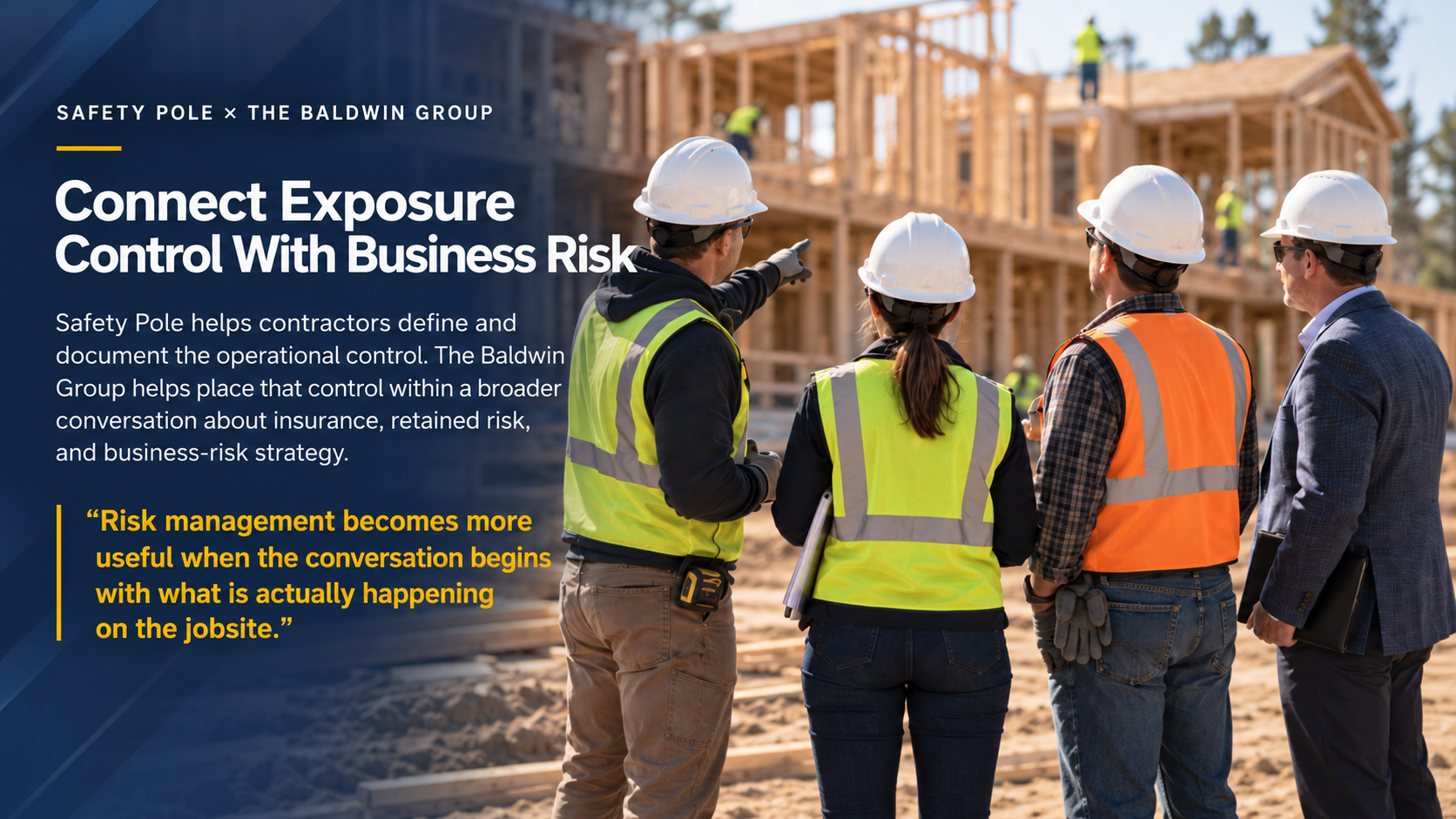
Business risk is not only about what happens after an incident. It also includes the physical controls, planning, documentation, and operating decisions made beforehand. See where fall protection fits into that larger conversation; and why managing the exposure starts with the work itself.