DEDICATED TO GETTING WORKERS HOME SAFELY SINCE 2004

Engineered Fall Protection for Real-World Jobsites

Equip Your Team with Confidence

For questions, concerns, or guidance on the Safety Pole system or fall-safety implementation, contact us.

© 2004–2026 Safety Pole, Inc.

The

JOBSITE STANDARD

Built on Safety. Set as Standard. The Safety Pole Perspective

Standards in Practice

Onboarding a New or Changing Crew

Your crew knows how the work has changed. When someone joins or moves to a new assignment, how much of that current information gets passed along?

By Safety Rick

Published in J.S. Behind The Scenes, Jobsite Standard

Onboarding a New or Changing Crew

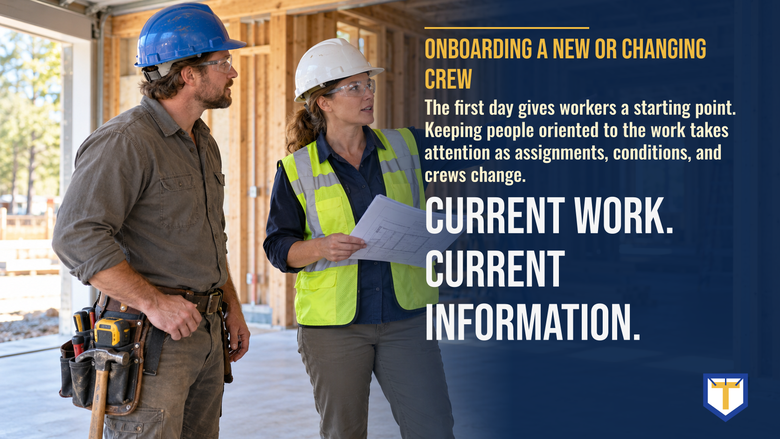
You’ve brought a worker onto an active job. The crew knows what’s changed, but the person joining may not have heard any of those conversations.

The work has moved on since the first orientation. Has the information moved with the people doing it?

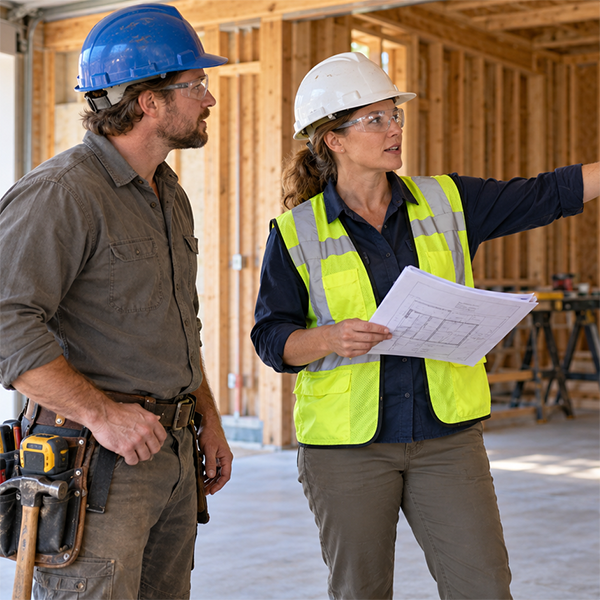
Picture a framing job a few weeks in. Your crew knows which area is active, where materials are being staged, and what changed since yesterday. A worker joins the crew that morning. They may know the trade, but they weren’t there for the conversations that got everyone else up to speed.

It’s easy to forget how much the regular crew knows without having to ask. Someone points toward the next area, mentions the foreman’s name, and figures the new person will pick up the rest as they go. Maybe they will. But relying on that assumption leaves a gap between what the crew understands and what the arriving worker has actually been told.

The gap isn’t limited to a new hire. It can appear when you move someone to a different task, borrow a worker from another crew, or hand an active work area to a different supervisor. Experience doesn’t make someone familiar with an assignment they haven’t seen before.

The useful question isn’t whether you’ve checked off orientation. It’s whether the person joining your crew understands the work you’re asking them to do today.

Source: S.P. Graphics

Day one gets everyone started

You need a starting point when someone arrives on your site. Who’s supervising the work? Where can the worker ask a question or report a concern? What are the relevant site conditions, emergency arrangements, and ways to get information? Those are practical things to cover before an arriving worker has to find answers in the middle of an assignment.

OSHA’s recommended education and training practices address hazard awareness, controls, program contacts, reporting routes, and checking whether workers understand information they receive. It’s useful guidance for building a safety-management program. It isn’t a universal day-one script, and it doesn’t mean that a general orientation satisfies every separate training requirement tied to a job or task.

That distinction belongs in the conversation. You may have introduced a worker to the project and still need to determine what training or instruction applies to the particular work they will perform. The employer and people with the appropriate authority have to make those determinations; a broad onboarding discussion cannot make them on the contractor’s behalf.

Still, the first day matters. You give people a way into the site, a sense of the current work, and someone to go to when they don’t understand something. You also get a chance to learn what the person already knows, and what needs more explanation.

We sometimes talk about orientation as though it’s one event that either happened or didn’t. On a job where assignments and conditions keep moving, that’s a limited way to think about it. The first conversation is a starting point. It can’t carry information about work that hasn’t happened yet.

The first few weeks can change the picture

Say you bring in a worker to help in one area. Later that week, you send the same person to join another crew. There’s no need to pretend they’re a new employee again. But the work is different. The access, nearby trades, sequence, work-area boundaries, or supervisor they should contact may have changed.

Even if everyone stays on the same crew, your original explanation can get old. Materials shift. A new trade moves into the space next door. Another phase starts. Yesterday’s discussion may have been perfectly clear for yesterday’s job and incomplete for today’s.

OSHA’s hazard identification and assessment guidance treats this work as ongoing and recognizes that changes in processes, staffing, scheduling, and organization can affect the hazards people need to consider. Its education and training guidance also addresses changing instruction needs when work or assignments change.

When the assignment changes, the information that made sense yesterday may need another conversation.

That doesn’t mean putting the whole crew through the same full orientation every time something moves. First, you need to recognize what has actually changed. Is there a new work area? A different responsibility? An unfamiliar control or point of contact? A task that needs separate, specifically required training? The response has to fit the work and whatever requirements govern it.

Sometimes the right next step is a brief clarification between the worker and the responsible supervisor. Sometimes it’s a more formal review or qualified instruction. You can’t decide between those options from a general article, and a short field conversation isn’t proof that a legal training duty was met.

What you can do is stop treating the original orientation as evidence that every future assignment has already been explained.

The useful question isn’t whether you’ve checked off orientation. It’s whether the person joining your crew understands the work you’re asking them to do today.

When the crew changes, who’s bringing the next person up to speed?

A crew roster tells you who’s working. It doesn’t tell you what each person knows about the assignment they’re walking into.

Think about how information travels during a busy week. The established crew hears that access has changed, sees another trade move in, and knows which part of the plan is being adjusted. A worker who arrives on Thursday hasn’t shared those conversations. You can’t assume they’ll pick everything up just by standing near the people who were there.

A worker can know the trade and still be new to your jobsite.

That’s why the handoff needs to be about the work in front of them. What is happening in this area right now? What has changed? Which hazards and controls are relevant to the assigned work? Who should this person speak with if what they find doesn’t match what was explained? Those are questions for the actual project team to answer from its current conditions, not a universal checklist we’re prescribing from the outside.

Where multiple employers are involved, the need to exchange information becomes especially visible. OSHA’s recommended communication and coordination practices address how host employers, contractors, and staffing agencies share information about hazards and controls. That is guidance for those defined working relationships. It isn’t a new legal procedure we’re assigning to every internal crew change.

But the operational point carries over as a consideration: somebody has to connect what the established crew knows with what the arriving worker needs to understand. A handoff should give that person a chance to ask questions, too. They may notice something that no longer matches the explanation or bring experience that’s relevant to the new work.

You don’t need to turn every arrival into a ceremony. You do need to avoid leaving the next person to piece together current conditions from half-heard conversations.

Don’t assume an explanation landed

You can give a clear explanation and still get a different understanding back.

It’s familiar enough on a construction site. Two people use the same trade terms but picture different parts of the work. A supervisor talks about an access route everybody else has been using for days. The person receiving that instruction hasn’t used it yet. Nobody is necessarily being careless; they’re working with different information.

So how do you find out whether the important part got across?

You might ask what work the person is joining, what has changed in the area, or who they’d speak with if the actual conditions don’t match the plan they were shown. Those are examples of useful questions, not mandated training questions or a certification process. Their purpose is to let a supervisor hear whether the immediate assignment makes sense to the worker.

OSHA’s recommended education and training practices encourage giving workers opportunities to ask questions and provide feedback. That matters here because a handoff is more than one person doing all the talking. A worker needs room to say, “That’s not the arrangement I was shown,” or “I’m not sure who handles that part.”

We should also be careful not to confuse a conversation with verified competence. Different workers have different language needs, previous training, and familiarity with the job. Actual regulatory or task-specific requirements still have to be handled through the appropriate qualified employer and site processes.

The point of a useful follow-up isn’t to quiz someone for the sake of a record. It’s to catch an assumption while there’s still an opportunity to explain what the current job actually calls for.

Make the next handoff someone’s responsibility

On a larger job, orientation and assignment information can pass through several hands. Someone handles site entry. An employer provides its own instruction. A foreman explains the task. Another supervisor may take over the area next week. The more people involved, the easier it is for each person to believe the essential information came from someone else.

You don’t resolve that by announcing a single legal rule for who owns every part of onboarding. Employers and projects operate under different arrangements, and the duties attached to particular work have to be determined from the relevant authority.

You can, however, make the working handoff less ambiguous. If you’re assigning someone to a crew or accepting them into your work area, make sure the current information has a clear route to that person. If a question falls outside the supervisor’s knowledge or permission, it needs to reach someone qualified to answer it.

Some contractors will record parts of that exchange under their established processes. A useful record can help the next supervisor understand what was discussed, which conditions had changed, and what still needed follow-up. A casual note isn’t a stand-in for formal training documentation or any other record required by the actual job.

The aim isn’t another piece of paperwork for its own sake. It’s continuity. When the crew changes tomorrow, the next supervisor should be able to find out what the arriving worker was told rather than guess.

And when we say “continuity,” that’s what we’re talking about: making sure information keeps up as people and work move through the job. The procedure matters only if it’s connected to what’s happening in the field.

Keep the handoff current

Not every new hire, reassignment, or crew change needs the same conversation. An experienced worker moving across the site has different needs from someone arriving for their first day. A person taking over an active work area needs different context from someone beginning work in an area the crew has yet to open.

What they have in common is a change in who’s doing the work, and possibly a change in what that person understands about it.

Start with the work as it stands now. Use the first orientation as a baseline, not as the end of the discussion. When something changes, decide what the arriving or reassigned worker needs to hear, what they already know, and what still requires a qualified answer.

Before the next person joins your crew, ask yourself: What do the rest of us know about this job that this person hasn’t had a chance to learn yet?

The Jobsite Standard

Autumn Quarter 2026

Standards in Practice

Onboarding a New or Changing Crew

October 8, 2026

By Safety Rick

A worker can know the trade and still be new to your jobsite.

Contents of This Issue

Published Articles

Upcoming Articles

  • A Change Order Can Change the Safety Plan | Scheduled for November 3, 2026
  • The Question Behind a Delayed Fall-Protection Decision | Scheduled for November 10, 2026
  • Evaluating the Safety Pole System for Residential Framing | Scheduled for November 17, 2026

Business Risk Starts With the Work

Business risk is not only about what happens after an incident. It also includes the physical controls, planning, documentation, and operating decisions made beforehand. See where fall protection fits into that larger conversation; and why managing the exposure starts with the work itself.

If you found this article useful, you may wish to receive future issues of The Jobsite Standard. Our email edition shares selected articles, field insights, and updates on safety practices relevant to working at height.

Let's Talk About Your Jobsite

Every project presents unique challenges.

Whether you're evaluating fall protection options, planning an upcoming project, or looking for guidance on creating a safer work environment, our team is here to help.

Send us a message and a Safety Pole representative will contact you to discuss your questions and project needs.

Name
Tell us about your project, safety concerns, fall protection requirements, or any questions you have for our team.

Your information will only be used to respond to your inquiry. We do not sell or share your information with third parties.

Dedicated to Getting Workers Home Safely