

Fall protection framers actually use
Engineered and built in the USA, patented, since 2004


Review the framing sequence, operating requirements and ownership costs before deciding what belongs on your project.
A residential framing contractor evaluating fall-protection equipment needs to connect the proposed purchase to recognizable work. Where will people work as the building takes shape? Which areas and access arrangements will change? What does the proposed equipment address, and what responsibilities will remain with the contractor?
Those questions provide a useful starting point for evaluating the Safety Pole System as planned anchorage infrastructure. It is a modular construction fall-protection system with configurations and deployment choices that require review against actual project conditions. A general residential application description is an invitation to examine fit, not an approved arrangement for every framing job.
Before requesting a proposal, you should be able to describe the work being considered and identify the application questions that remain open.
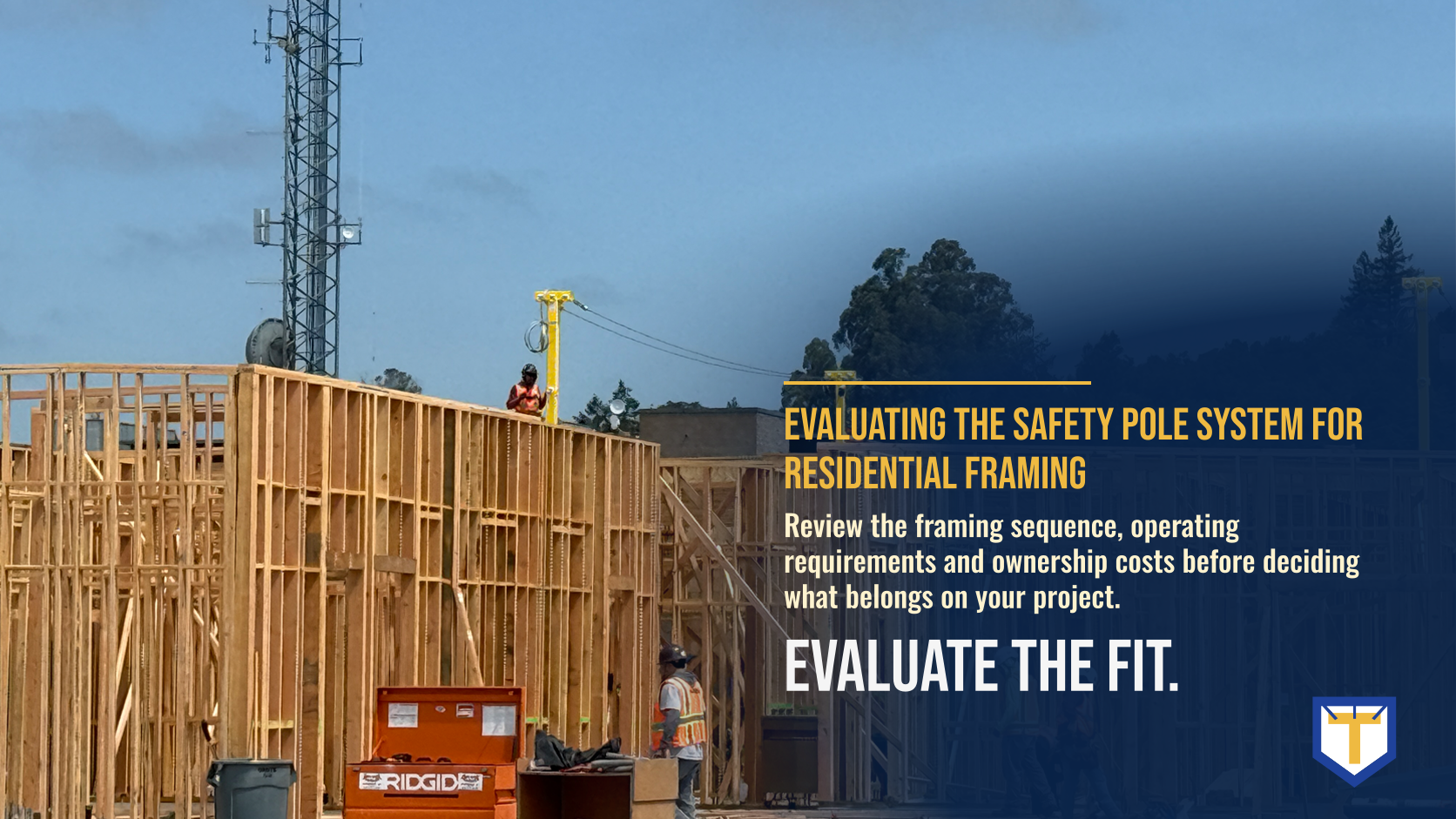
A framing sequence describes more than the order in which the structure is assembled. Floors, walls and roof framing create successive areas of work. For equipment evaluation, the useful description includes the positions people need to reach, access to those positions and the surrounding activity relevant to protection planning.
Bring your own sequence into the discussion. Describe the phases that matter to the proposed use, rather than treating a product photograph as a complete application example. A floor-framing activity and a later roof-framing activity may present different questions even though both belong to the same building. Their place in the schedule does not select the protection arrangement.
For each area under consideration, identify what is established and what still needs review. The field team can explain the intended tasks and movement. Safety and technical reviewers can identify what information they need to evaluate the proposed approach. A discussion that keeps those roles connected is more useful than choosing a system name first and assuming the work will fit it.
The result at this stage is a defined application question. It might concern whether a proposed use is suitable for the work area, or how the next deployment condition would be addressed. Its answer belongs with current product instructions and the applicable project and technical authorities.
Safety Pole terminology separates several choices that can otherwise become blurred in a purchasing conversation. The Safety Pole System is the root modular system family. MUF and Traditional are system configurations. Residential describes an application context. Single Anchor and Horizontal Lifeline, or HLL, describe deployment or use configurations.
Those terms should help you read a proposal accurately. Residential does not select MUF or Traditional, and a system configuration does not by itself establish the appropriate deployment for a work area. Ask which choice is proposed and what current authority supports its use under the conditions being considered.
MUF is associated with progressing the system upward as construction advances. Leapfrog is the approved field term for that progression. Single Anchor describes deployment of an individual assembled vertical unit as an anchorage point; HLL describes deployment in which multiple units support horizontal lifeline use. These relationships do not establish a working span, worker capacity, connection arrangement or mounting method.
A useful proposal connects system terminology to a reviewed need without making the terminology carry a technical conclusion it cannot supply.
That distinction lets you consider future utilization without treating every forecast project as assured use.
The review needs to cover transitions as well as active use. Where current controlled instructions and the approved project condition permit, a future receiving condition may be prepared in advance, and some preparation may occur at ground or reachable height before final positioning. Whether those opportunities apply belongs in the project review.
During planned relocation or reconfiguration under the applicable approved project procedure, equipment may pass through a temporary non-active movement-management state before subsequent deployment. That state is different from active protection. The arrangements required during the transition must be resolved under the applicable instructions, project procedure and technical determinations.
For a purchasing decision, ask who will plan and manage those transitions and what operating resources they involve. Do not assume that a proposal to progress equipment through the build promises uninterrupted protection or removes the need to evaluate the work between deployments. The movement method, worker connections and return-to-use conditions need their own authorized answers.
Safety Pole is designed for reuse across projects when inspected, maintained and confirmed serviceable in accordance with current manufacturer guidance. That makes future use a legitimate consideration in the acquisition decision, with the qualification carried alongside it.
Consider what ownership would require in your operation. Equipment has to be managed between uses as well as during a deployment. Applicable handling, transport, storage, inspection, maintenance, training and replacement needs belong in the evaluation. Confirm the actual requirements from current guidance; a general description of reusable equipment does not settle each of them.
Reuse does not establish a fixed number of projects or a guaranteed service life. It also does not establish continued serviceability after damage or a fall-arrest event. A financial evaluation period is an assumption selected for analysis, not a manufacturer life rating.
That distinction lets you consider future utilization without treating every forecast project as assured use. Identify which work is expected to support the investment and what remains uncertain. Keep maintenance and replacement needs in view rather than assuming that continued ownership makes subsequent operation cost-free.
Begin the cost comparison with the fall-protection and access activities your contractor already carries for the work being evaluated. Establish the scope before adding figures. Then distinguish the activities and costs that would remain, those that could change if supported by the project review, and the new costs associated with the proposed approach.
Purchase price alone does not describe the full operating commitment. Include the ownership and operating costs that apply, using records where available and identifying estimates where they remain necessary. The comparison also needs a consistent period and a clear account of the work the equipment is expected to support.
Keep access requirements in the estimate unless a verified review establishes a change to the relevant scope. Evaluating anchorage does not establish that scaffold, access equipment or other protective measures can be removed. A different equipment proposal should not be credited with avoiding activities the contractor still needs to perform.
Treat project-specific acquisition information from Safety Pole as a separate input to that comparison. Combine it with the applicable operating costs and your utilization assumptions. A forecast remains a forecast; the comparison does not demonstrate realized savings merely because the arithmetic is complete.
Safety Pole remains one physical control within a complete fall-protection program. Project planning, compatible personal fall-arrest equipment, trained personnel, inspection, supervision and maintenance remain necessary under current instructions and applicable requirements.
Before seeking a purchasing proposal, assemble a usable account of the framing sequence, the work areas being considered, the current protection and access approach, and the responsibilities you need the proposal to address. Include unresolved application questions so they can reach the appropriate people rather than disappear inside an equipment request.
Request an application review with Safety Pole to discuss system fit and the project conditions that need further assessment. You should be able to follow the proposed equipment back to the work it is intended to support, while keeping technical selections, transition arrangements and ownership assumptions explicit enough to review.

Other JS Editions
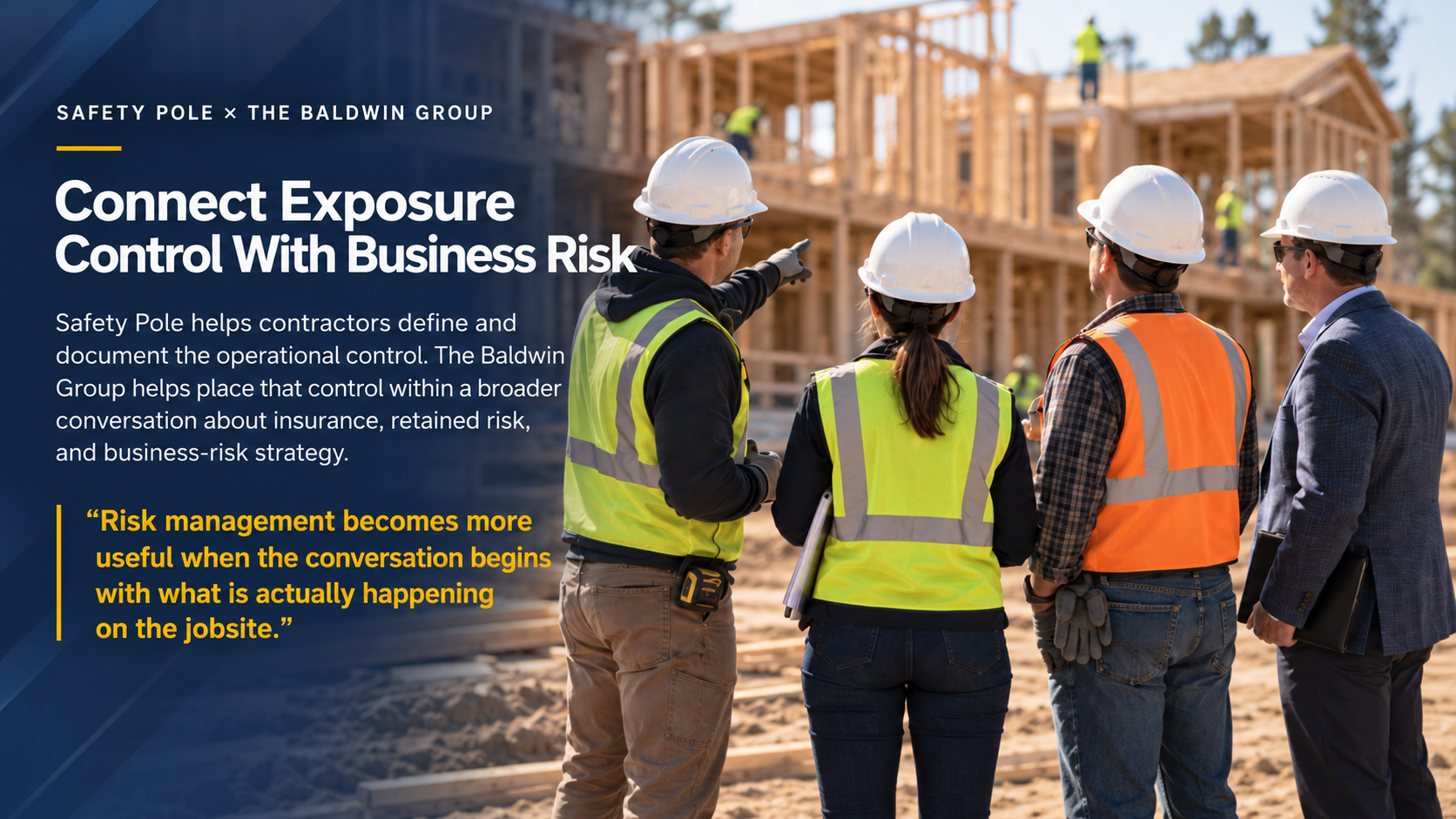
Business risk is not only about what happens after an incident. It also includes the physical controls, planning, documentation, and operating decisions made beforehand. See where fall protection fits into that larger conversation; and why managing the exposure starts with the work itself.

