
An article published by The National Law Review reports that in May, the U.S. Department of Labor announced the launch of a new Occupational Safety and Health Administration (OSHA) initiative aimed at addressing one of the most persistent hazards in the workplace: falls. Specifically, OSHA has introduced a National Emphasis Program (NEP) focused on preventing and reducing fall-related injuries and fatalities, with particular attention directed toward the construction industry.
As part of the program’s rollout, OSHA established a mandatory 90-day outreach and education period. During this time, the agency is informing employers and workers about the program’s scope, expectations, and enforcement priorities. As a result, formal site inspections under the NEP are scheduled to begin on or about July 30, 2023. While the program does not have a defined end date, OSHA has stated that it will remain in effect for a minimum of six months and may continue beyond that timeframe depending on enforcement findings and ongoing risk levels.
Although the NEP applies to several industries where fall hazards are present, OSHA has made it clear that construction will be a primary focus. This emphasis is supported by injury and fatality data. In 2021, workplace falls accounted for 5,190 fatalities across all industries in the United States. Of those, 986 occurred within the construction sector, underscoring the disproportionate risk faced by construction workers and the ongoing need for focused prevention efforts.
In announcing the program, OSHA explained its rationale by noting that falls remain the leading cause of death and serious injury across multiple industries. Given this persistent trend, the agency determined that an increase in both enforcement activity and outreach efforts was warranted. The Fall NEP is intended not only to identify noncompliance, but also to reinforce the importance of systematic fall protection planning and implementation.
One of the key aspects of the NEP is the nature of inspections themselves. Inspections may occur without advance notice. An OSHA compliance officer does not need a formal complaint or scheduled visit to initiate an inspection. If an officer observes employees working at height while driving past a jobsite or traveling for unrelated reasons, they are authorized to stop and conduct an on-the-spot inspection. This approach reflects OSHA’s intent to address fall hazards as they are encountered in real-world conditions, rather than only during prearranged visits.
If, during an inspection, a compliance officer identifies inadequate fall protection—or the absence of fall protection altogether—the consequences can be significant. OSHA citations for fall protection violations are often classified as serious and can carry substantial monetary penalties. In addition to fines, deficiencies may result in work stoppages, corrective action requirements, and increased regulatory scrutiny. In more severe cases, particularly where willful violations or fatalities are involved, certain offenses can expose employers to criminal liability. These outcomes can have lasting operational and financial impacts.
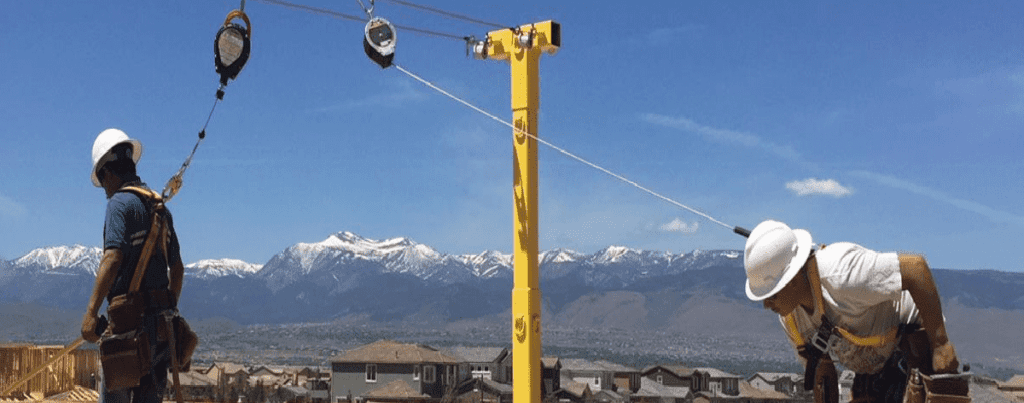
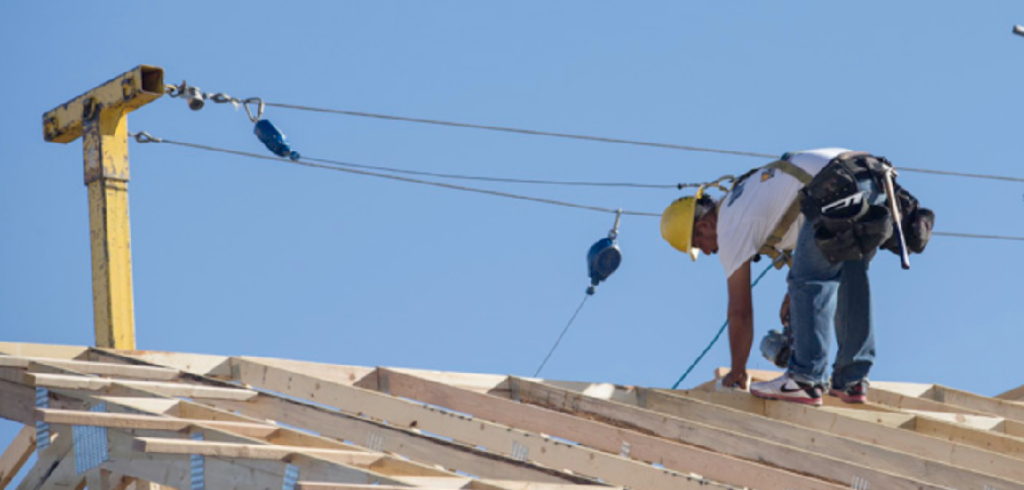
For construction framing contractors and others operating in high-risk environments, the implementation timeline still allows an opportunity to evaluate current practices and make necessary improvements. However, with inspections beginning at the end of July, that window is narrowing. Ensuring that appropriate fall protection systems are properly planned, installed, and maintained before enforcement activity increases is a practical step toward risk reduction and regulatory readiness.
Contractors who have not yet reviewed their fall protection approach may wish to do so promptly. Establishing compliant systems in advance of enforcement activity can help reduce uncertainty during inspections and support safer working conditions on site.