Safety starts with Safety Pole

Successful construction depends on more than skilled trades and efficient schedules. It requires coordinated planning, effective leadership, and a workforce committed to quality, accountability, and protecting the people responsible for the work.
For Wolf Construction Services, Inc., these principles are closely connected to the company’s identity.
Based in West Des Moines, Iowa, Wolf Construction is a commercial subcontractor specializing in wood framing, roofing, and trim carpentry. With operations serving major construction markets throughout the Midwest and Colorado, the company provides specialized trade services for multifamily developments, hotels, senior living facilities, student housing, and other commercial projects.
Wolf Construction traces its beginnings to 1993, when founder Scott Wolfswinkel began roofing homes in northwest Iowa while attending college.
What started as a small roofing operation developed into a multistate construction business encompassing several specialized building trades.
Following Wolfswinkel’s passing in 2016, the company’s leadership committed to continuing the principles that shaped its development. In 2017, Jon VanDis, Reid VanDis, and Brandon Hoch acquired the company’s naming rights and assets, continuing operations as Wolf Construction Services, Inc.
Central to that legacy is the company’s WE WILL philosophy: Plan, Serve, Encourage, Endure, and Finish.
These principles reflect an emphasis on careful preparation, mutual respect, teamwork, perseverance, and following through on professional commitments.
Wolf Construction’s commercial framing operations require coordination among general contractors, construction managers, subcontractors, suppliers, and field personnel.
Its work includes structural wood framing for apartments, hotels, senior living facilities, student housing, and commercial buildings.
The company emphasizes efficient project management, skilled construction crews, specialized equipment, and quality control as important elements of its services.
This planning-driven approach is especially relevant to framing operations, where work progresses through changing structural elevations and construction phases.
Effective coordination helps crews anticipate material requirements, access conditions, scheduling conflicts, and the safety considerations associated with each stage of construction.
Wolf Construction’s organizational structure includes dedicated safety leadership, with Jeremy Burger serving as Vice President and Director of Safety.
The company’s published descriptions of field responsibilities reinforce the importance of supervision, communication, training, and accountability.
Foremen are responsible for directing daily construction activities, coordinating personnel, and establishing work objectives. Crew leads provide direct oversight to smaller teams while participating in construction work and supporting adherence to company procedures.
These responsibilities illustrate an important principle of workplace safety: policies and expectations must be translated into practical decisions where work is performed.
Effective field leadership requires awareness of changing site conditions, clear communication among crews, and the willingness to address hazards before they result in incidents.
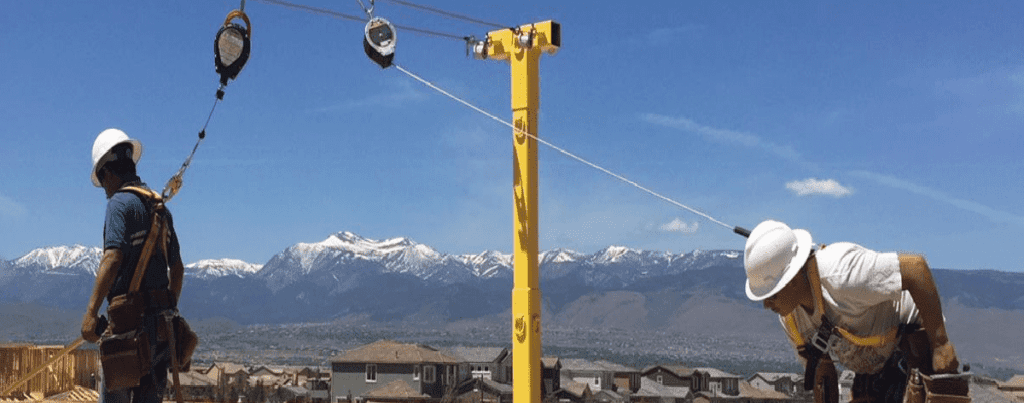
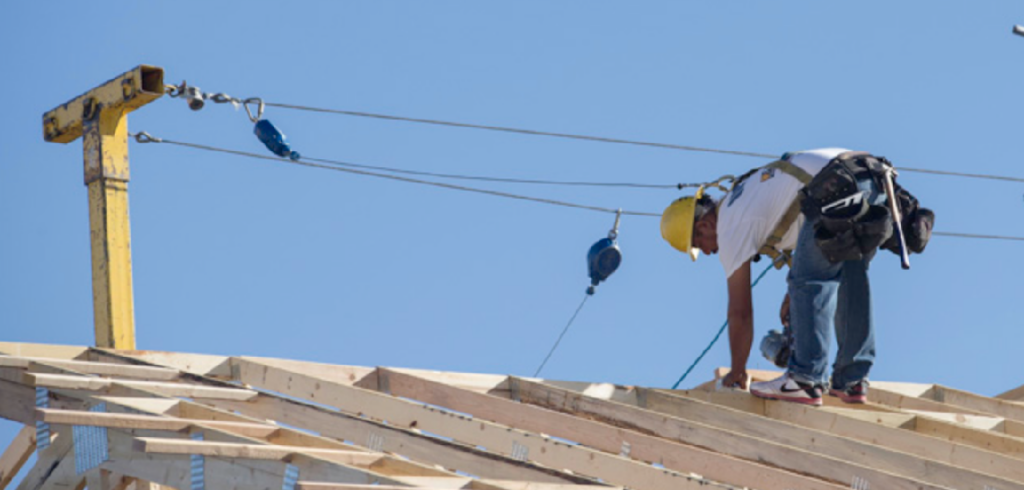
Commercial wood framing and roofing present particular challenges for managing elevated work.
As structures rise, construction crews encounter changing floor elevations, exposed edges, roof surfaces, and temporary access conditions. The movement of personnel, materials, and equipment can create additional exposure that must be considered throughout the construction sequence.
Effective fall protection requires more than selecting equipment. It depends on assessing the work environment, identifying appropriate anchorage, planning installation, and ensuring that workers understand the requirements for safe operation.
Engineered fall-protection systems can support these efforts when properly selected, installed, inspected, and used as part of a site-specific safety plan.
For contractors performing framing and roofing work, incorporating these considerations into project planning helps connect worker protection with the practical demands of construction.
Wolf Construction’s operating philosophy places particular emphasis on planning, supporting fellow workers, overcoming challenges, and completing projects responsibly.
These principles have direct relevance to the development of a productive safety culture.
Planning encourages the identification of potential problems before work begins. Teamwork and encouragement support communication, while accountability reinforces the importance of maintaining professional standards under demanding conditions.
Through its dedicated safety leadership, defined field responsibilities, and commitment to teamwork, Wolf Construction provides an example of how organizational values can establish a foundation for responsible construction practices.
The connection between preparation, skilled execution, and worker protection remains essential to successful commercial framing and roofing operations.
Explore Wolf Construction’s commercial framing, roofing, and trim carpentry services, project experience, and commitment to teamwork throughout its regional markets.
Safety Pole supports construction professionals who recognize that effective fall protection requires coordinated planning, appropriate equipment, worker training, and consistent field oversight.
Engineered fall-protection systems can contribute to these efforts by helping contractors address elevated-work hazards as an integral part of their construction safety planning.
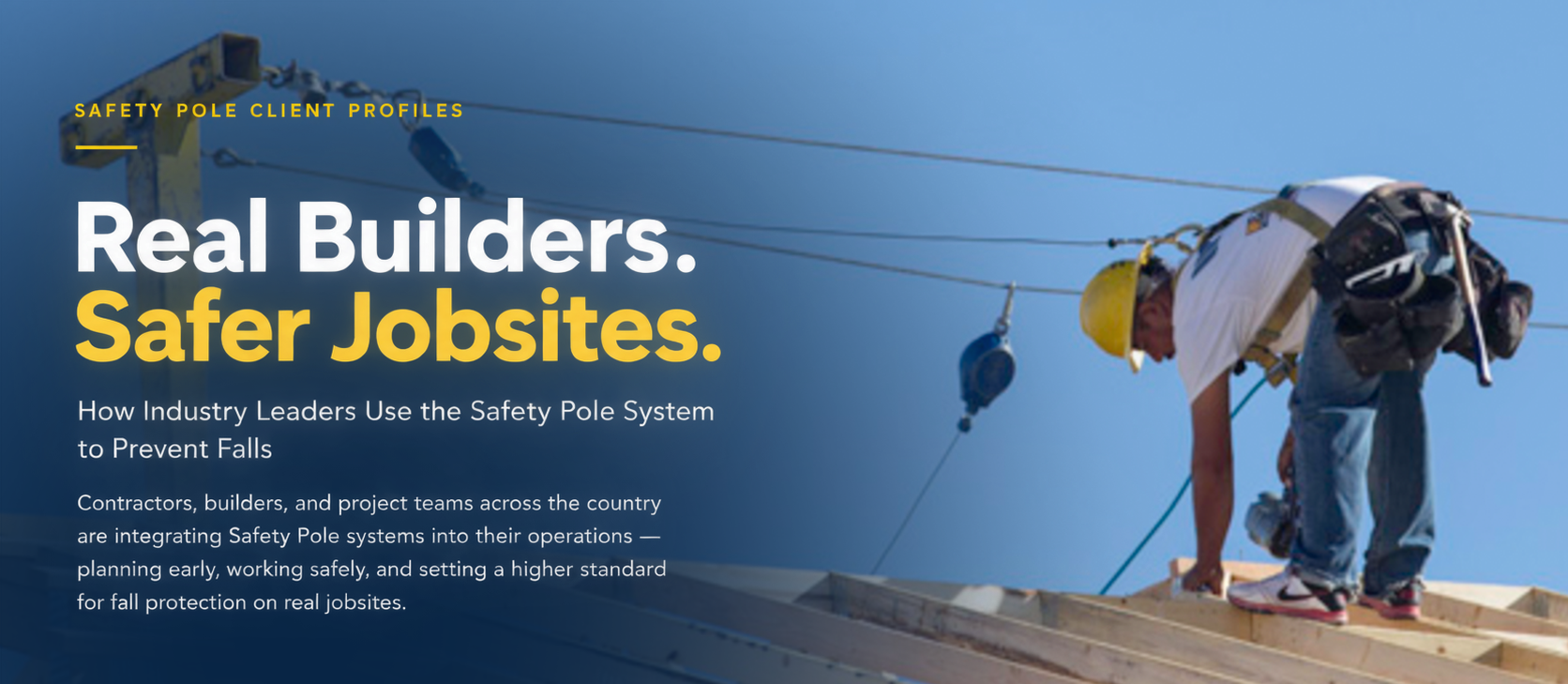
Safety Pole is built and refined through real-world use—on active jobsites, by crews who depend on it every day. The most meaningful improvements to our system come directly from conversations with the people using it in the field.
As part of our Rebuild. Reset. Re-Engage. initiative, we’re reconnecting with partners who are willing to share their experience—whether through direct feedback, a conversation with our team, or, when appropriate, a deeper collaboration.
For some partners, that collaboration takes the form of a case study video, an interview, or a written feature that highlights how Safety Pole is being used on real jobsites. For others, it’s simply a chance to exchange insights and help us continue improving how safety is planned, implemented, and supported.
If you’re using Safety Pole today, we invite you to share your experience below. Your perspective helps guide what comes next.