Safety starts with Safety Pole
Safety decisions are often made in moments, but their consequences can last much longer. Behind every hard hat is a person whose safe return matters to family, friends, coworkers, and loved ones. Sometimes the strongest reason to work safely is not standing on the jobsite at all.
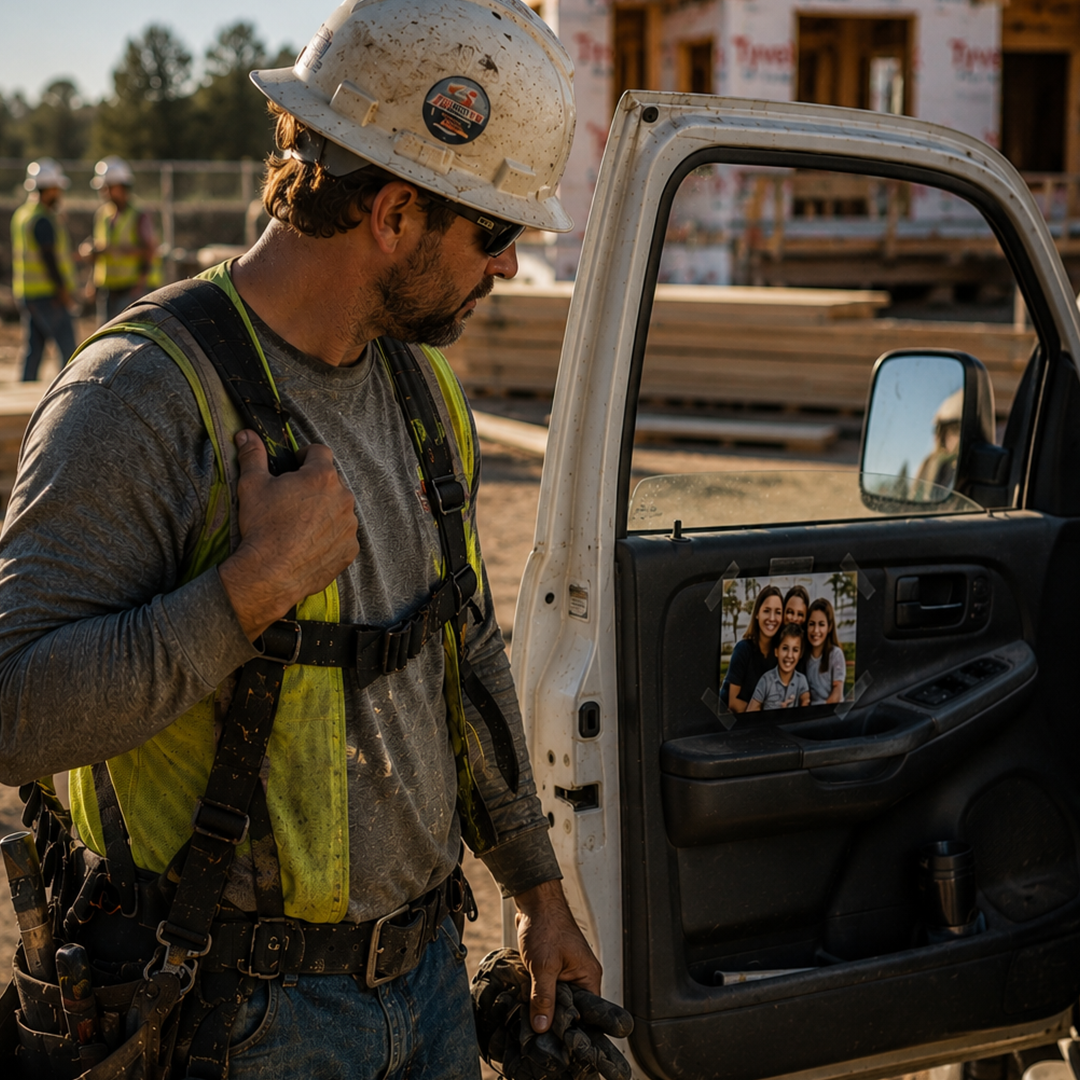
The photograph had been there for months.
Taped to the inside of the truck door, its edges had begun to curl slightly from heat, dust, and daily use. It wasn’t large enough to attract much attention, but every morning it was one of the first things the worker saw before stepping onto the jobsite.
His wife stood in the center of the picture.
His two children were beside her.
The image had become part of his routine.
Coffee.
Hard hat.
Tool bag.
Photograph.
Work.
Most mornings, he barely thought about it.
On this particular day, he paused for a moment before closing the door.
The project schedule was demanding. Several critical tasks were scheduled for the week. Like every construction professional, his attention was already shifting toward the work ahead.
Yet for a brief moment, the photograph served as a reminder of something beyond the jobsite.
The people in the picture would never attend a safety meeting.
They would never review a fall protection plan.
They would never walk the deck or inspect an anchor point.
But they would live with the consequences of whatever happened there.
Safety is often discussed in terms of regulations, procedures, and equipment.
Those things matter.
But behind every hard hat is a person whose safe return matters to someone else.
And sometimes the strongest reason to work safely is waiting at home.
Every worker arrives on a jobsite carrying more than tools.
They carry responsibilities.
Commitments.
Relationships.
People who expect to see them again at the end of the day.
A spouse waiting at home.
Children expecting a parent to walk through the door.
Parents.
Friends.
Coworkers.
People whose lives intersect with theirs in ways that often remain invisible during a busy workday.
Construction requires focus. Workers think about schedules, materials, equipment, weather conditions, inspections, and production goals. The immediate demands of the job naturally occupy most of a person’s attention.
There is nothing wrong with that.
The work deserves focus.
But safety deserves perspective.
Most workplace decisions are evaluated by their immediate impact. Will the task be completed faster? Will production improve? Will the schedule remain on track?
Safety decisions are different.
Their consequences often extend far beyond the person making them.
A shortcut does not affect only the worker taking it.
A missed hazard does not affect only the person exposed to it.
An injury rarely remains contained within the boundaries of a jobsite.
The effects travel outward.
Families feel them.
Coworkers feel them.
Friends feel them.
Entire crews feel them.
Every safety decision reaches beyond the jobsite. Family members, friends, and loved ones all depend on workers returning home safely.
This is one reason many experienced safety professionals avoid viewing safety as a compliance issue alone.
Regulations matter.
Procedures matter.
Equipment matters.
But most workers are not motivated by regulations.
They are motivated by people.
The strongest safety cultures recognize this reality.
They understand that behind every hard hat is a person whose absence would matter to others. Behind every harness is someone with responsibilities beyond the project. Behind every worker is a network of relationships that depends upon their safe return.
This perspective changes the way risk is evaluated.
The question is no longer:
“Can I get away with this?”
It becomes:
“Is this risk worth taking?”
Protective measures stop feeling like obstacles.
They become tools that help preserve what matters most.
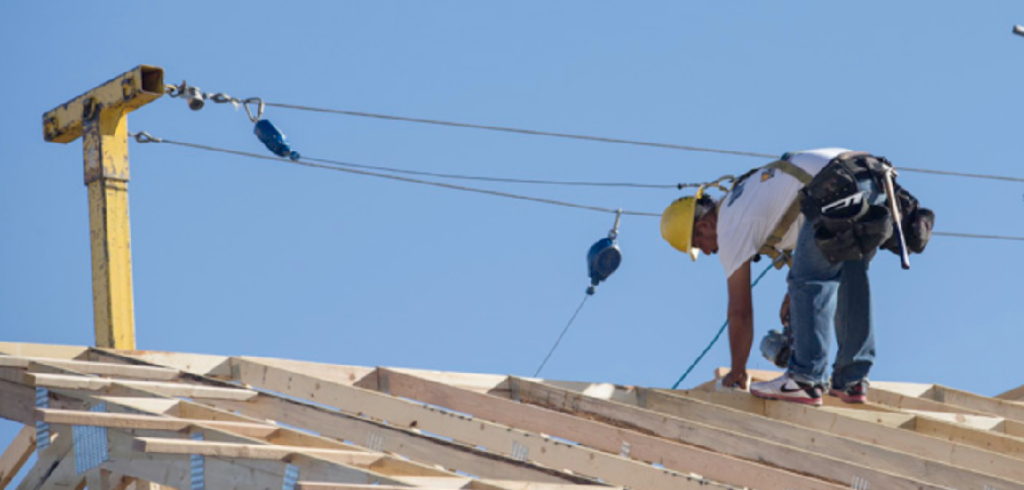
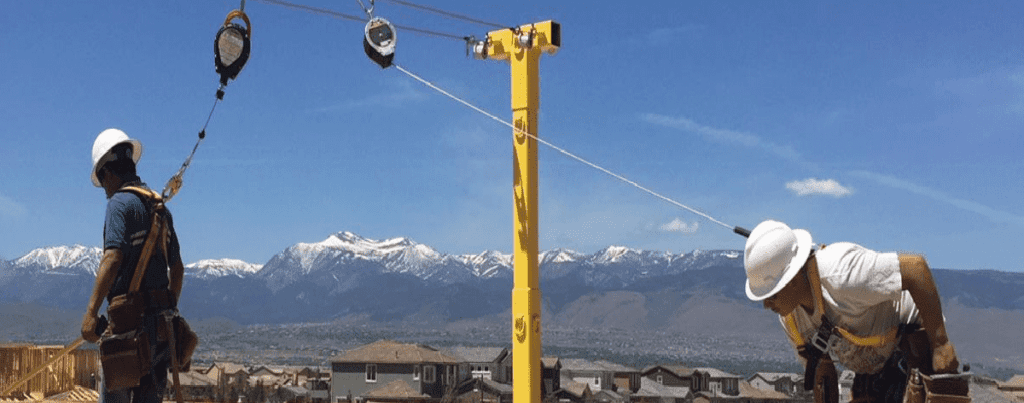
That perspective becomes especially important when work is performed at height, where a single moment can produce consequences that reach far beyond the individual involved. Reliable fall protection, proper planning, and consistent hazard awareness all help reduce risk, but the reason those measures matter is ultimately personal.
Safety Pole was developed to help support safer working conditions for crews exposed to fall hazards. Yet the purpose of any safety system extends beyond compliance, productivity, or project schedules. At its core, safety exists to help protect people and preserve the lives they return to after work.
Every shift eventually ends.
The tools are put away.
The equipment is secured.
The trucks leave the site.
What matters then is not simply what was built.
What matters is who gets to go home.
Because when it comes to safety, you’re not the only one counting on you.
And that is a responsibility worth remembering.