DEDICATED TO GETTING WORKERS HOME SAFELY SINCE 2004

Engineered Fall Protection for Real-World Jobsites

Equip Your Team with Confidence

For questions, concerns, or guidance on the Safety Pole system or fall-safety implementation, contact us.

© 2004–2026 Safety Pole, Inc.

The

JOBSITE STANDARD

Built on Safety. Set as Standard. The Safety Pole Perspective

Applied Safety

Heat Stress Doesn’t Happen All At Once

Heat-related illnesses typically develop gradually. Recognizing the body’s early warning signs helps crews intervene before minor symptoms become emergencies.

By SP Editorial Team

Published in J.S. Safety Insights, Jobsite Standard

Heat Stress Doesn’t Happen All At Once

Heat-related illness is often misunderstood because it rarely begins as an emergency. Long before a worker requires medical attention, the body usually provides warning signs that something is changing. Recognizing those signals early is one of the most effective ways to prevent a more serious situation later in the day.

The first sign was easy to miss.

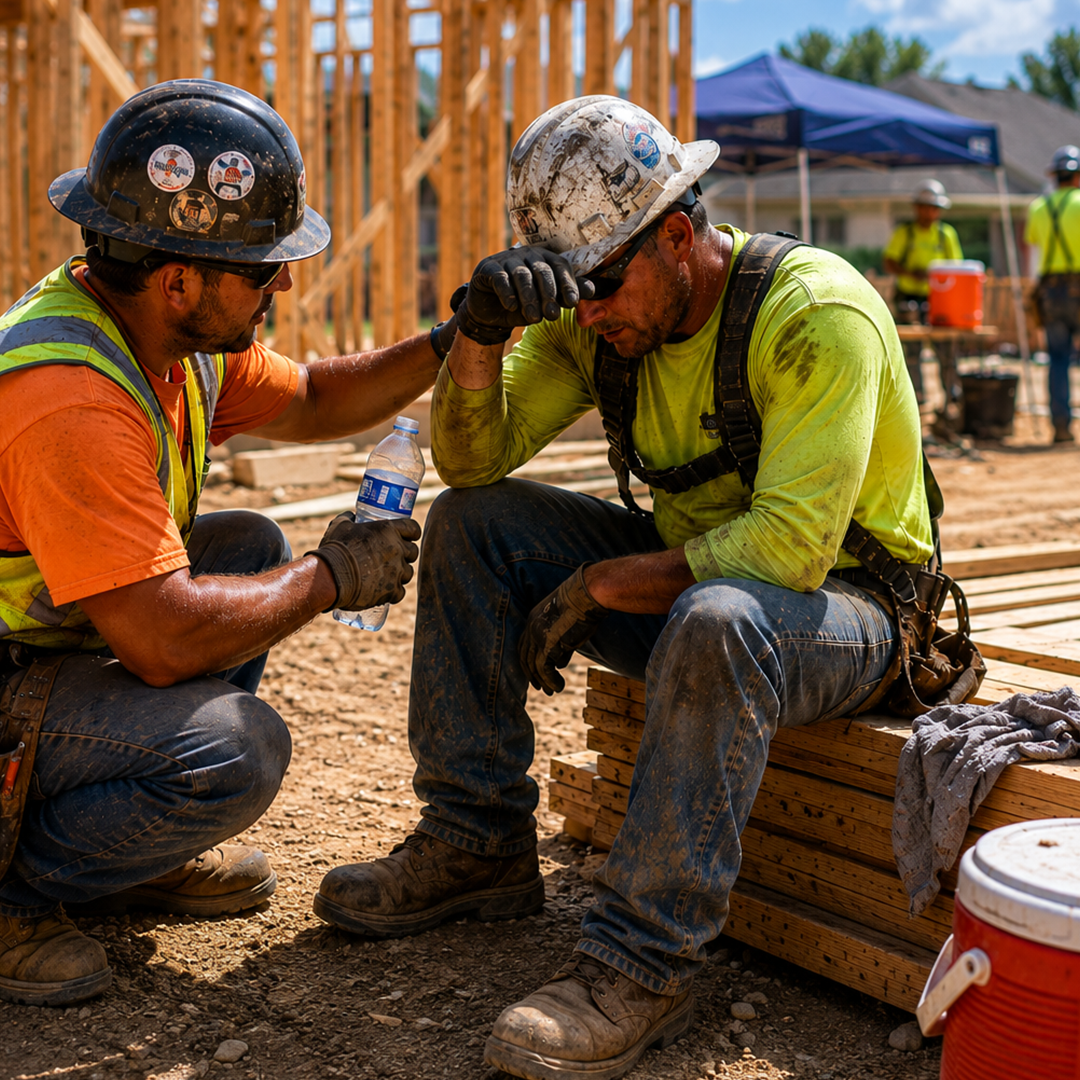
The carpenter had been working in the sun for most of the afternoon. The crew was making good progress, and nobody had complained about the heat. As far as anyone could tell, it was simply another demanding day on the jobsite.

A coworker noticed him pause near a stack of materials and rest his hands on his knees.

A few minutes later, he did it again.

Nothing dramatic.

No collapse.

No emergency.

Just small changes that seemed slightly out of place for someone who normally worked at a steady pace from start to finish.

The coworker walked over with a bottle of water and asked if he was doing alright.

The answer came quickly.

“Yeah, I’m fine.”

But after a few more minutes in the shade, the worker admitted he had been feeling more fatigued than usual and had developed a mild headache earlier in the day.

Work stopped briefly while he cooled down, hydrated, and recovered.

The situation never became serious.

That was the point.

Heat-related illness rarely begins with a medical emergency. It usually begins with subtle warning signs that are easy to dismiss and even easier to overlook. A slower pace. Reduced focus. Unusual fatigue. A worker who seems just a little different than they did an hour earlier.

The crews that recognize those signs early are often the crews that prevent more serious incidents later.

Heat-related illnesses usually develop gradually.
Source: S.P. Graphics

Most heat-related emergencies do not begin as emergencies.

They begin as discomfort.

A worker feels a little warmer than usual. Concentration becomes slightly more difficult. Energy starts to fade. Tasks that seemed easy earlier in the day require more effort. Water breaks become more frequent. Sweat no longer feels refreshing.

Nothing about these changes seems especially alarming.

That is precisely what makes them dangerous.

Heat-related illnesses are often progressive events. The body typically provides warning signs before a situation becomes critical. The challenge is that those warnings often resemble the normal effects of a demanding workday, making them easy to dismiss on a busy jobsite.

Construction workers expect to feel tired.

They expect physical exertion.

They expect discomfort.

The earliest symptoms of heat stress often arrive disguised as something familiar.

A worker may simply appear slower than usual.

Less focused.

More irritable.

More fatigued.

The difference can be subtle enough that neither the worker nor those around them immediately recognize what is happening.

Yet the body is already communicating that something is wrong.

Early symptoms may include:

  • Increased thirst
  • Unusual fatigue
  • Headaches
  • Muscle cramps
  • Difficulty concentrating
  • Irritability
  • Dizziness or lightheadedness

Individually, these symptoms may seem minor.

Together, they can indicate that the body is struggling to regulate temperature effectively.

The earliest symptoms of heat stress often arrive disguised as something familiar.

One reason safety professionals place such emphasis on early recognition is that workers who receive attention during the initial stages of heat stress are far less likely to experience more serious heat-related illness later in the shift.

The warning signs matter because they often appear long before the emergency.

As heat stress progresses, performance begins to change.

Attention may drift.

Decision-making may slow.

Situational awareness may decline.

Workers become less attentive to hazards around them and more likely to make mistakes they would normally avoid.

This is one reason heat safety extends beyond preventing heat illness itself.

A worker experiencing heat stress may also become more vulnerable to other jobsite hazards. Reduced concentration can affect tool use, equipment operation, communication, hazard recognition, and overall awareness of changing conditions.

For workers performing tasks at elevation, even a small decline in attention can increase exposure to fall hazards and other serious incidents.

The most effective response is to recognize the warning signs early.

Hydration remains important, but hydration alone is not always enough. Workers should also pay attention to rest periods, shade opportunities, environmental conditions, workload, and physical exertion levels throughout the day.

Supervisors and crew members play an important role as well.

In many cases, coworkers notice the symptoms before the affected worker does.

A normally energetic employee who becomes unusually quiet.

A worker who pauses more frequently than usual.

Someone who seems slower, less focused, or visibly fatigued.

These changes may not seem significant on their own.

They are often the first indication that intervention may be needed.

The strongest crews understand that heat safety is a shared responsibility.

Workers monitor themselves.

Coworkers watch for changes in one another.

Supervisors adjust work practices when conditions warrant.

Everyone participates in recognizing the warning signs before they become emergencies.

Safety systems support that effort by helping reduce additional jobsite risks when environmental conditions become challenging. For workers performing tasks at height, maintaining reliable fall protection remains important regardless of temperature, providing a consistent layer of protection when fatigue, heat, or reduced awareness may affect judgment and decision-making.

The goal is not simply to respond when someone becomes ill.

The goal is to recognize the warning signs before that happens.

Because heat stress rarely arrives without notice.

The symptoms usually appear first.

The safest crews pay attention before the body forces them to.

The Jobsite Standard

NSM 2026

Applied Safety

Heat Stress Doesn’t Happen All At Once

June 19, 2026

By SP Editorial Team

Contents of This Issue

Published Articles

Upcoming Articles

  • Experience Isn’t Immunity | Scheduled for June 22, 2026
  • The Best Crews Speak Up | Scheduled for June 23, 2026
  • Safety Is a Team Sport | Scheduled for June 25, 2026
  • You’re Not The Only One Counting On You | Scheduled for June 26, 2026
  • The Day’s Work Isn’t Finished Yet | Scheduled for June 29, 2026
The strongest crews understand that heat safety is a shared responsibility.

If you found this article useful, you may wish to receive future issues of The Jobsite Standard. Our email edition shares selected articles, field insights, and updates on safety practices relevant to working at height.

Let's Talk About Your Jobsite

Every project presents unique challenges.

Whether you're evaluating fall protection options, planning an upcoming project, or looking for guidance on creating a safer work environment, our team is here to help.

Send us a message and a Safety Pole representative will contact you to discuss your questions and project needs.

Name
Tell us about your project, safety concerns, fall protection requirements, or any questions you have for our team.

Your information will only be used to respond to your inquiry. We do not sell or share your information with third parties.

Dedicated to Getting Workers Home Safely