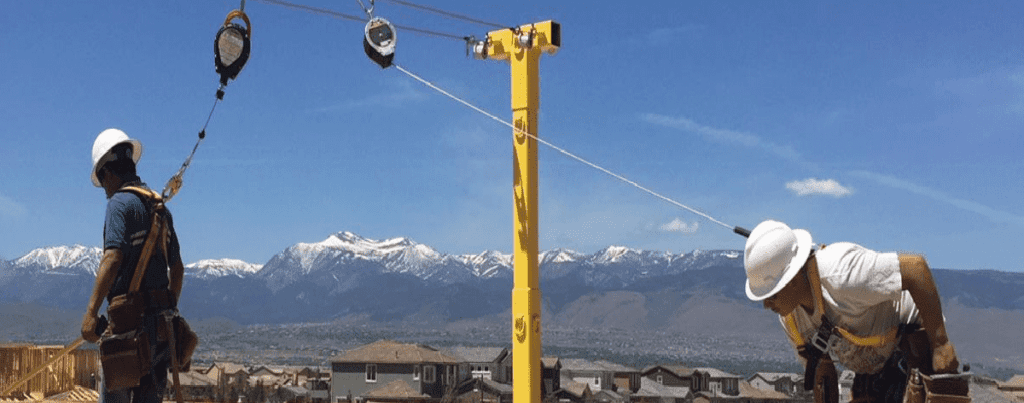
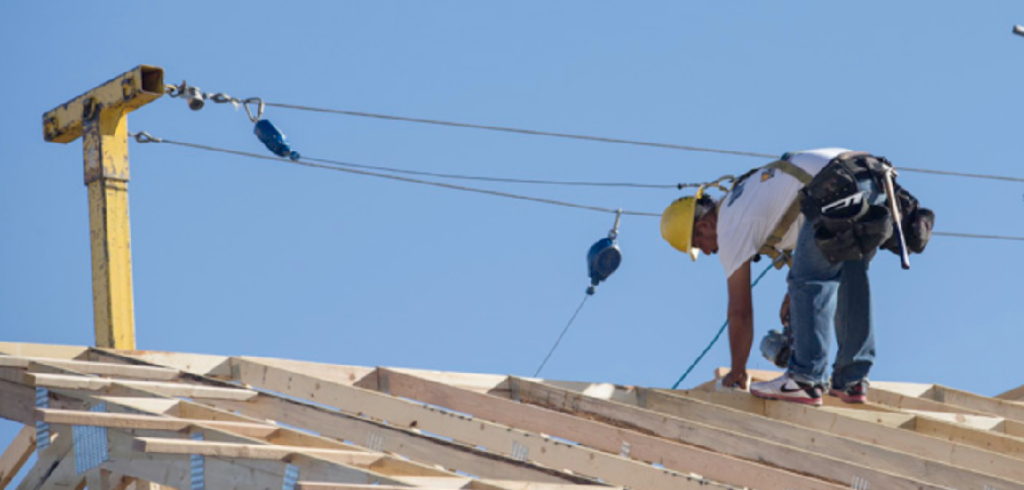
Safety starts with Safety Pole
It is not that crews have forgotten how to build, or that the fundamentals of construction have changed. What has changed is how much is happening at once. More trades are working in the same space. Schedules are tighter. Temporary conditions last longer. Decisions that used to be made once are revisited daily.
From the outside, a jobsite may still look familiar. Framing goes up. Materials move. Crews cycle in and out. But from the middle of it, the difference is clear. There are more variables to track, more handoffs to manage, and fewer moments where conditions stay the same for long.
That growing complexity does not automatically make a jobsite unsafe. But it does change how safety shows up, how easily it can be understood, and how quickly it can get overlooked.
Jobsite complexity matters because it competes for attention.
When work is straightforward, risks tend to stand out. An edge is clearly exposed. An opening is temporary and obvious. The sequence makes sense. As jobsites become more layered, those signals become harder to read. Conditions change mid-day. Protection that matched the plan in the morning may not align with where work ends up by the afternoon.
This is not about people being careless. It is about the mental load required to keep everything straight.
Superintendents are coordinating more activity in tighter windows. Crews are shifting between tasks more frequently. Temporary conditions such as open edges, incomplete installs, and partial systems are present for longer stretches of time. Each condition on its own may feel manageable. Together, they demand constant awareness.
The challenge is that complexity rarely announces itself as a problem. It settles in quietly and becomes normal. When everything feels urgent, safety can fade into the background. Not because it is ignored, but because it is assumed to be handled.
That assumption is often where gaps form. Not from bad intent, but from attention being pulled in too many directions at once.
Understanding why jobsites have become more complex helps explain why safety today depends so heavily on clarity, consistency, and visibility. In environments that change quickly, safety has to be easy to recognize and hard to misinterpret.
Several forces are stacking up on modern jobsites. None of them are new on their own. What feels different now is how often they overlap.
Projects move faster than they used to. Compressed timelines mean less buffer between phases and fewer pauses to reset conditions. When work advances quickly, temporary hazards tend to stay in place longer while crews move on.
Trades are arriving earlier and working closer together. Areas that once belonged to a single crew are now shared. That overlap increases coordination demands and makes it harder for any one group to fully control conditions.
Open edges, partial installs, and interim solutions used to be short-lived. On many jobsites today, those conditions persist across days or weeks. What was once a brief exposure becomes part of the daily environment.
Superintendents and foremen are managing more moving pieces at the same time. Material deliveries, inspections, subcontractor sequencing, and documentation all compete for attention alongside safety.
When crews work around the same conditions day after day, those conditions stop standing out. Familiarity can dull awareness, even when the underlying risk has not changed.
None of these factors are inherently negative. Together, they create an environment where it takes more effort to notice what has shifted and what still needs attention.
On real jobsites, complexity often shows up in small, ordinary moments.
A crew starts work near an edge that was protected earlier in the week, but the protection has been adjusted to accommodate another trade. No one is doing anything wrong. The condition has simply changed.
A work area that was meant to be temporary remains open longer than planned because the schedule shifted. Everyone has worked around it for days, so it no longer registers as something new.
Multiple crews pass through the same space, each assuming the last group addressed protection because the area looks familiar. The handoff is implied rather than confirmed.
These situations rarely feel dramatic. They feel routine. That is what makes them easy to miss.
The more complex a jobsite becomes, the more often safety relies on recognition rather than reminders. Crews need to be able to see, quickly and clearly, what is protected, what is not, and what has changed since the last time they were in that area.
When those signals are unclear, people fill in the gaps with assumptions. Most of the time, nothing happens. Over time, those assumptions stack up.
Modern jobsites are not more dangerous by default, but they are more demanding. When more activity happens in the same space, for longer periods, safety depends less on reminders and more on recognition. Understanding how complexity shows up is often the first step toward noticing what might otherwise fade into the background.
At an awareness level, complexity invites reflection more than immediate action.
Contractors may find it useful to consider questions like these:
These are not questions with quick answers. They are ways to evaluate how complexity is experienced in the field.
When safety depends on constant explanation, it competes with everything else demanding attention. When it is clear and consistent, it supports work rather than interrupting it.
Complex jobsites reward systems and approaches that reduce interpretation. The less guessing required, the easier it is for crews to stay focused on the work in front of them.
Jobsite complexity is not going away. If anything, it is becoming the norm.
More activity, tighter timelines, and longer temporary conditions are part of how modern construction operates. The challenge is not to eliminate complexity, but to recognize how it changes the way safety needs to show up.
Awareness is the first step. Not awareness driven by alarm, but awareness grounded in observation. Noticing where conditions linger. Noticing when familiarity replaces clarity. Noticing when assumptions start doing too much work.
On complex jobsites, safety does not fail all at once. It fades at the edges, quietly, when attention is stretched thin.
The more clearly safety is visible and consistent, the less effort it takes to keep it top of mind. In environments that change quickly, that clarity matters.
Understanding why today’s jobsites are more complex helps teams see where attention is most valuable. From there, awareness can do what it does best. It keeps people oriented, engaged, and ready to notice what has changed before it becomes a problem.

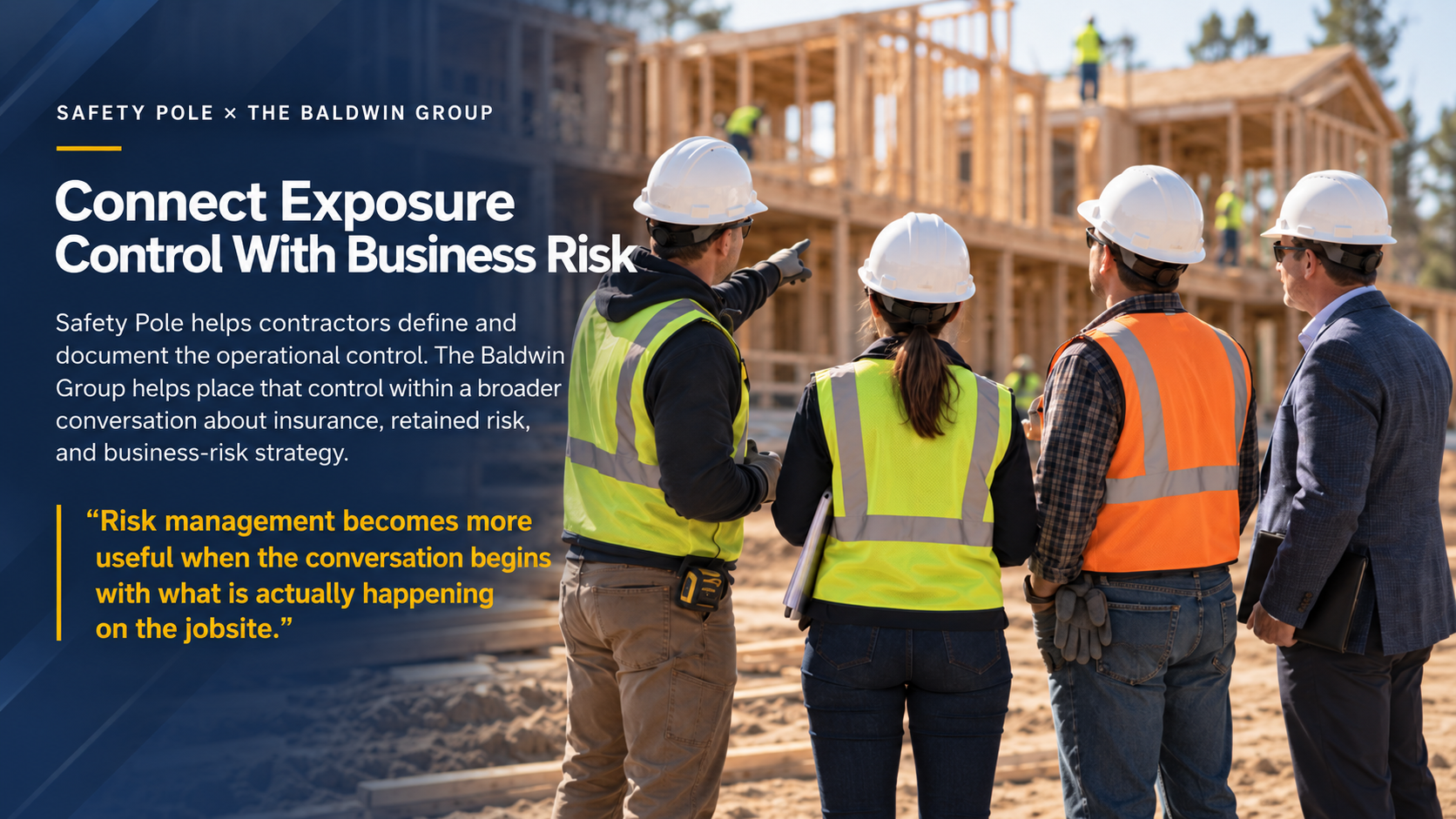
Business risk is not only about what happens after an incident. It also includes the physical controls, planning, documentation, and operating decisions made beforehand. See where fall protection fits into that larger conversation; and why managing the exposure starts with the work itself.