Safety starts with Safety Pole

Successful framing operations depend on precision, coordination, and the ability to manage changing jobsite conditions. From material preparation and structural assembly to elevated work and crew supervision, every phase requires careful attention to productivity, quality, and worker protection.
For Buffalo Framing & Truss, these responsibilities are closely connected.
Headquartered in Pflugerville, Texas, Buffalo is a family-owned construction company specializing in residential framing and manufactured building components. With roots extending back to 1986, the company has grown from a small framing operation into an established supplier of turnkey framing services, engineered floor and roof trusses, wall panels, and building materials for single-family and multifamily construction throughout Central Texas.
Buffalo’s approach to construction combines design coordination, component manufacturing, material delivery, and field installation into a comprehensive framing operation.
Its turnkey services provide builders with a coordinated solution for the framing phase, bringing together engineered components, on-site labor, supervision, and materials under a unified management process.
This integrated approach supports consistent workmanship and allows construction teams to address scheduling, material handling, and installation requirements before crews begin work.
An important part of this process is Buffalo’s just-in-time delivery system, which coordinates the arrival of manufactured components with construction schedules. By reducing unnecessary material accumulation, the company seeks to maintain more organized work areas, limit trip hazards, and improve overall jobsite efficiency.
Buffalo Framing & Truss maintains a formal safety program extending beyond its employees to include subcontractors working on its projects.
Jobsite-specific training is conducted before each project, while site-access procedures are intended to ensure workers have received the necessary safety preparation.
The company’s safety leadership includes a Certified Safety and Health Official and an OSHA-authorized outreach trainer, supported by additional qualifications in fall protection, equipment operation, and emergency response.
Buffalo also reports extensive OSHA 10-hour and 30-hour safety training throughout its management, manufacturing, and subcontractor workforce.
These measures reflect a deliberate effort to establish safety expectations before construction begins and reinforce them through ongoing education, daily inspections, and incident-prevention activities.
Residential framing presents distinct safety challenges as structures progress from floor systems to wall assembly, roof framing, and elevated installation work.
Open edges, changing elevations, material movement, and simultaneous trade activities require continuous attention to fall hazards and worker access.
Buffalo’s safety practices emphasize proper protective equipment, trained personnel, organized work areas, and appropriate controls for elevated work.
The importance of these measures is reinforced by customer observations published on Buffalo’s website. Wes Ramsey, Vice President of Operations at Skybeck, highlights Buffalo’s commitment to clean jobsites, high-visibility guardrails, proper PPE, and workers remaining tied off when working at elevation.
These are practical examples of safety expectations becoming visible through everyday field operations.
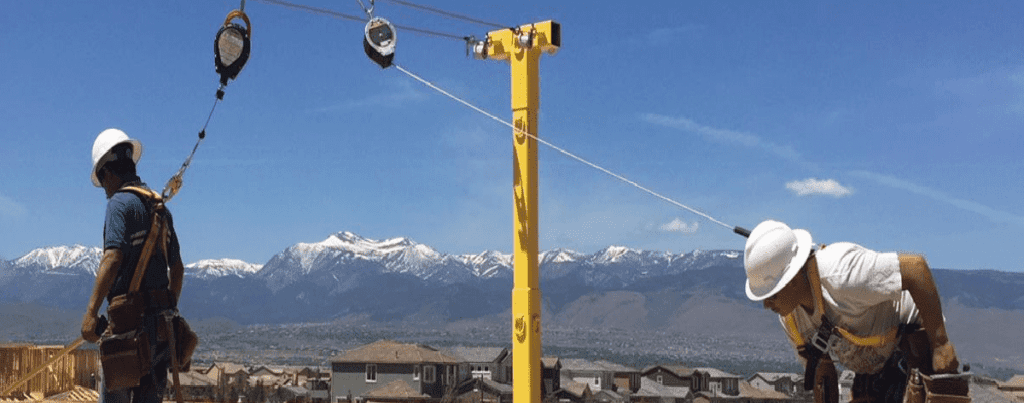
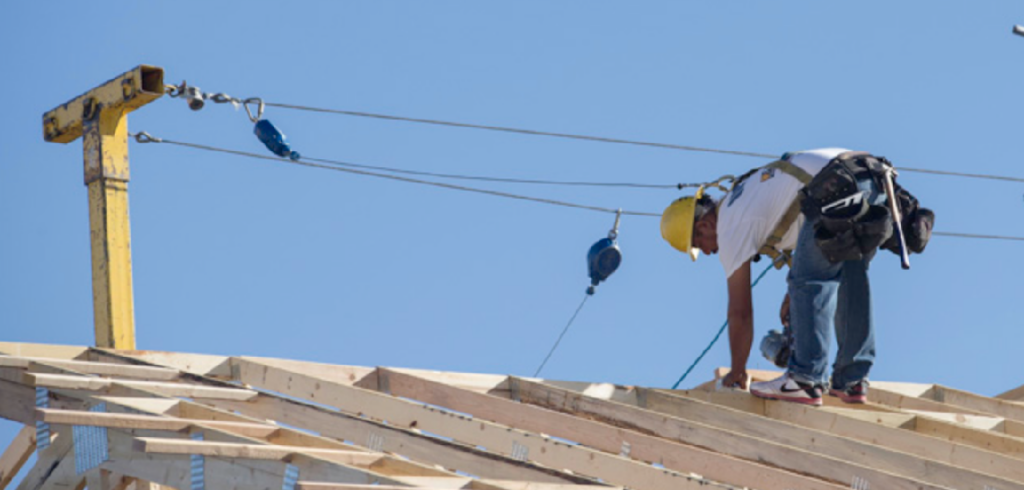
Engineered fall-protection systems can support this broader approach when appropriate anchorage, installation procedures, worker training, and equipment inspections are incorporated into the construction safety plan.
Buffalo identifies teamwork, continuous improvement, and lasting customer relationships as central principles of its operations.
Its safety philosophy extends those principles into the field, where management oversight, worker participation, and consistent operational practices contribute to a shared responsibility for hazard prevention.
This connection between manufacturing precision, organized logistics, and active jobsite safety illustrates an important principle: safer construction is not achieved through equipment alone, but through the coordinated decisions and practices that support its proper use.
By incorporating safety into training, material delivery, project planning, and field supervision, Buffalo Framing & Truss demonstrates how a specialized framing contractor can make worker protection an integral part of construction operations.
Explore Buffalo’s turnkey framing services, manufactured building components, construction projects, and commitment to safety throughout Central Texas.
Safety Pole works to support construction professionals who recognize that effective fall protection requires more than equipment selection. Proper planning, suitable anchorage, trained personnel, and consistent field oversight are essential to managing elevated work.
Engineered fall-protection solutions can form an important part of that commitment, helping contractors incorporate worker protection into the changing demands of residential construction.
Safety Pole is built and refined through real-world use—on active jobsites, by crews who depend on it every day. The most meaningful improvements to our system come directly from conversations with the people using it in the field.
As part of our Rebuild. Reset. Re-Engage. initiative, we’re reconnecting with partners who are willing to share their experience—whether through direct feedback, a conversation with our team, or, when appropriate, a deeper collaboration.
For some partners, that collaboration takes the form of a case study video, an interview, or a written feature that highlights how Safety Pole is being used on real jobsites. For others, it’s simply a chance to exchange insights and help us continue improving how safety is planned, implemented, and supported.
If you’re using Safety Pole today, we invite you to share your experience below. Your perspective helps guide what comes next.